USU Forester Receives Top State Forestry Award
As a former hotshot firefighter of the Great Yellowstone Fire, Utah State University forester Darren McAvoy thought he’d seen the worst of forest disturbances. But recent bark beetle outbreaks throughout the Rocky Mountain West have him worried.
“I’ve chased forest disturbances my whole career and I’m a believer in the resilience of forests,” says McAvoy, a forestry extension associate in USU’s Department of Wildland Resources. “But these outbreaks are unprecedented. There’s very little regeneration, so you wonder if things will recover.”
McAvoy, who joined USU in 1999, was awarded the State of Utah Department of Natural Resources’ 2009 Forest Stewardship Achievement Award in recognition of his efforts in educating Utah landowners and professionals about healthy forestry management practices. He received the award from USU alum and State Forester Dick Buehler in a ceremony held at the Utah Association of Conservation Districts convention Nov. 4-6 in St. George.
“Forests in the West are facing tough times,” Buehler says. “But with examples…like Darren, landowners and professionals can make a positive impact.”
McAvoy was commended for his efforts as director of the Utah Forest Landowner Education Program, a program administered by USU Cooperative Extension, and as editor of the program’s “Utah Forest News,” a quarterly newsletter for the state’s forestry landowners and professionals.
UFN, which features articles, tips and news aimed at helping private landowners in Utah achieve efficient, cost-effective, environmentally friendly and firewise management of their forested properties, has won several national extension awards. This past year, McAvoy also released a video, “Considering a Timber Harvest for Your Family Forest,” that promotes good stewardship through carefully planned timber harvesting and active forest management.
“The newsletter and video, along with our other educational and outreach efforts, are awareness and community-building tools,” McAvoy says. “We’re trying to provide landowners with sound, unbiased information and connect them with public and private forestry professionals who can help them achieve their goals and maintain healthy forests on their land.”
McAvoy notes that much of Utah’s water supply comes from upland forests.
“Poor logging practices and inadequate forest management practices threaten our watersheds,” he says. “Water is the most important resource we have so protection of these areas is central to our efforts.”
Many of Utah’s forest landowners need advice and expertise on how to manage their properties. Utah is divided into six areas, each with a state foresters assigned to provide on-the-ground assistance to property owners.
“Unfortunately, there is some distrust of government and regulation among Utahns,” McAvoy says. “My job has been to convince landowners to make contact with their area forester and seek solutions to reduce fire hazards, cope with beetle outbreaks, protect water quality and preserve a family’s property.”
With the newsletter and other communications tools, McAvoy is able to report many “success stories,” where landowners and professionals have partnered to tackle challenges together.
“Building a community through the newsletter and our Web site has been a hugely positive thing,” he says. “I receive letters and phone calls from landowners reporting on their experiences in working with state professionals. People are interested and concerned about protecting Utah’s forests.”
“I’ve chased forest disturbances my whole career and I’m a believer in the resilience of forests,” says McAvoy, a forestry extension associate in USU’s Department of Wildland Resources. “But these outbreaks are unprecedented. There’s very little regeneration, so you wonder if things will recover.”
McAvoy, who joined USU in 1999, was awarded the State of Utah Department of Natural Resources’ 2009 Forest Stewardship Achievement Award in recognition of his efforts in educating Utah landowners and professionals about healthy forestry management practices. He received the award from USU alum and State Forester Dick Buehler in a ceremony held at the Utah Association of Conservation Districts convention Nov. 4-6 in St. George.
“Forests in the West are facing tough times,” Buehler says. “But with examples…like Darren, landowners and professionals can make a positive impact.”
McAvoy was commended for his efforts as director of the Utah Forest Landowner Education Program, a program administered by USU Cooperative Extension, and as editor of the program’s “Utah Forest News,” a quarterly newsletter for the state’s forestry landowners and professionals.
UFN, which features articles, tips and news aimed at helping private landowners in Utah achieve efficient, cost-effective, environmentally friendly and firewise management of their forested properties, has won several national extension awards. This past year, McAvoy also released a video, “Considering a Timber Harvest for Your Family Forest,” that promotes good stewardship through carefully planned timber harvesting and active forest management.
“The newsletter and video, along with our other educational and outreach efforts, are awareness and community-building tools,” McAvoy says. “We’re trying to provide landowners with sound, unbiased information and connect them with public and private forestry professionals who can help them achieve their goals and maintain healthy forests on their land.”
McAvoy notes that much of Utah’s water supply comes from upland forests.
“Poor logging practices and inadequate forest management practices threaten our watersheds,” he says. “Water is the most important resource we have so protection of these areas is central to our efforts.”
Many of Utah’s forest landowners need advice and expertise on how to manage their properties. Utah is divided into six areas, each with a state foresters assigned to provide on-the-ground assistance to property owners.
“Unfortunately, there is some distrust of government and regulation among Utahns,” McAvoy says. “My job has been to convince landowners to make contact with their area forester and seek solutions to reduce fire hazards, cope with beetle outbreaks, protect water quality and preserve a family’s property.”
With the newsletter and other communications tools, McAvoy is able to report many “success stories,” where landowners and professionals have partnered to tackle challenges together.
“Building a community through the newsletter and our Web site has been a hugely positive thing,” he says. “I receive letters and phone calls from landowners reporting on their experiences in working with state professionals. People are interested and concerned about protecting Utah’s forests.”
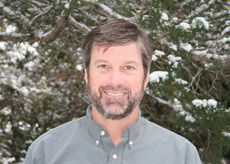
Darren McAvoy, director of the USU-based Utah Forest Landowner Education Program, received the State of Utah's 2009 Forest Stewardship Achievement Award.
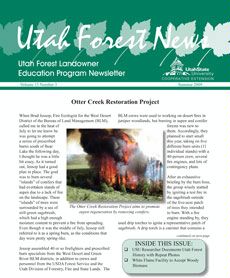
McAvoy is editor of 'Utah Forest News,' a quarterly newsletter aimed at helping private landowners achieve environmentally friendly and firewise management of their forested properties.
TOPICS
Awards 862storiesSHARE
Comments and questions regarding this article may be directed to the contact person listed on this page.