USU Moab Graduates Nine Students in Inaugural EMT Program Cohort
By Marcus Jensen |
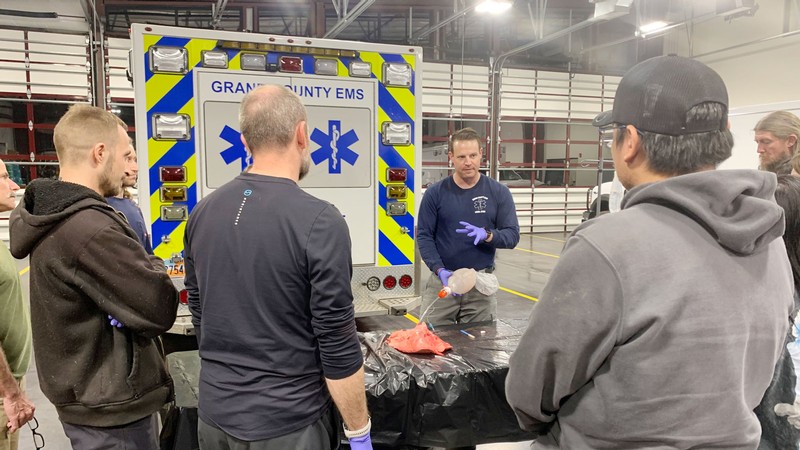
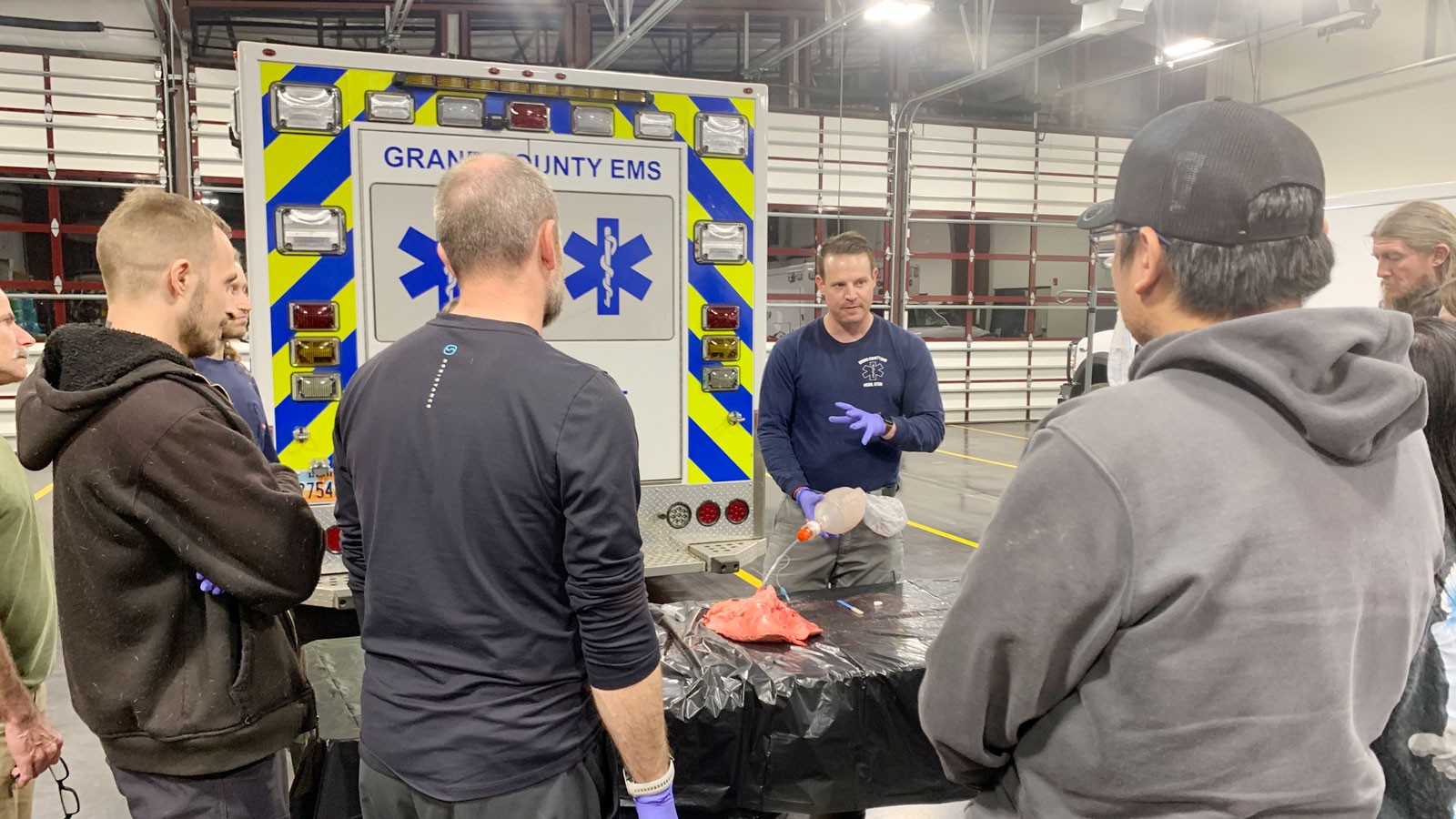
MOAB, Utah — There are now nine more emergency medical technicians in Grand County, as the Utah State University Moab campus celebrated the inaugural group of graduates of its emergency medical technician certificate program in July.
The program, which is offered in collaboration with Grand County Emergency Medical Services and meets at the GCEMS Station in Moab, looks to strengthen the local healthcare workforce, improve emergency response capacity in Grand County, and encourage students to build lasting careers within the community. The new certificate program has secured ongoing funding and will run several times each year.
During the three-month intensive course that began in February, students received specialized training from active EMTs and paramedics at GCEMS, as well as from a variety of guest lecturers, including doctors from Moab Regional Hospital, first responders in Grand County Search and Rescue, flight crews from the local Intermountain Health Care base, and first responders from the Moab Valley Fire Department.
“It really enriched the learning experience for the students to have the course so integrated with local community resources,” said Anna Knight, USU EMT instructor and the education captain for Grand County Emergency Medical Services. “This has been a great start to the partnership between USU and Grand County EMS, and we're excited to continue working together to bring high-quality EMS courses to Moab.”
With the course being taught at the Grand County EMS, students also participated in ride-alongs to gain real-world experience. These clinical shifts allowed students to join responders during real events in the local community.
“My ride-alongs with the Grand County EMS crew helped me understand how what we were learning was applied on the job,” said Keltain Reece-Sullivan, one of the nine graduates. “I got to see the providers demonstrate both the hard skills and soft skills of the job.”
Students also appreciated the course being taught by active EMTs and paramedics. They felt that all the information and scenarios they were given were as up-to-date as possible.
“All of the knowledge provided is current and accurate and as real-world as it gets,” said Andrew Kalinyak, another participant in the certificate course. “Clinical shifts are with GCEMS personnel and responding to real events in the local community. It was an incredibly rewarding program, and I am happy I was able to attend.”
As part of the course, students worked closely together in scenarios to simulate working as a team. Reece-Sullivan said that people taking the course should quickly connect with other students and study together. This helped them work better in scenarios and learn from each other.
“The sessions with other students were very valuable to me,” Reece-Sullivan said. “You also need to really engage in the class. There will be times during scenarios when you'll feel embarrassed or shy, but I encourage you to embrace that feeling and lean into it. Those scenarios are where so much of the practical learning takes place.”
Several of the graduates are now working as EMTs for Grand County EMS, while others have their eyes set on different goals.
“SeveralEMTclass grads were recently hired to work asEMTs for Grand County EMS, and we're excited to have them on board,” Knight said. “Some students now have their eyes on paramedic or nursing programs as a next step in their healthcare careers. Others are using their new medical training to improve their skills as outdoor recreation guides.
“Guides are often the first people on scene for outdoor recreation medical emergencies, so having guides in the community with strong medical training who can stabilize a patient and report key information to 911 dispatchers can really help incoming EMS and SAR responders provide great patient care and evacuation.”
The class is capped at 12 students. To be able to take the course, students must be enrolled at USU. For more information, visit usu.edu/degrees-majors/emergency-medical-technician_tc. Specific questions about the program can be directed to Anna Knight (anna.knight@usu.edu).
WRITER
Marcus Jensen
News Coordinator
University Marketing and Communications
marcus.jensen@usu.edu
CONTACT
Anna Knight
Health Professions, EMT Instructor
Utah State University Moab
anna.knight@usu.edu
TOPICS
Health 395storiesSHARE
Comments and questions regarding this article may be directed to the contact person listed on this page.