Utah State Legislature Brief: How USU is Affected by 2025 Legislative Session

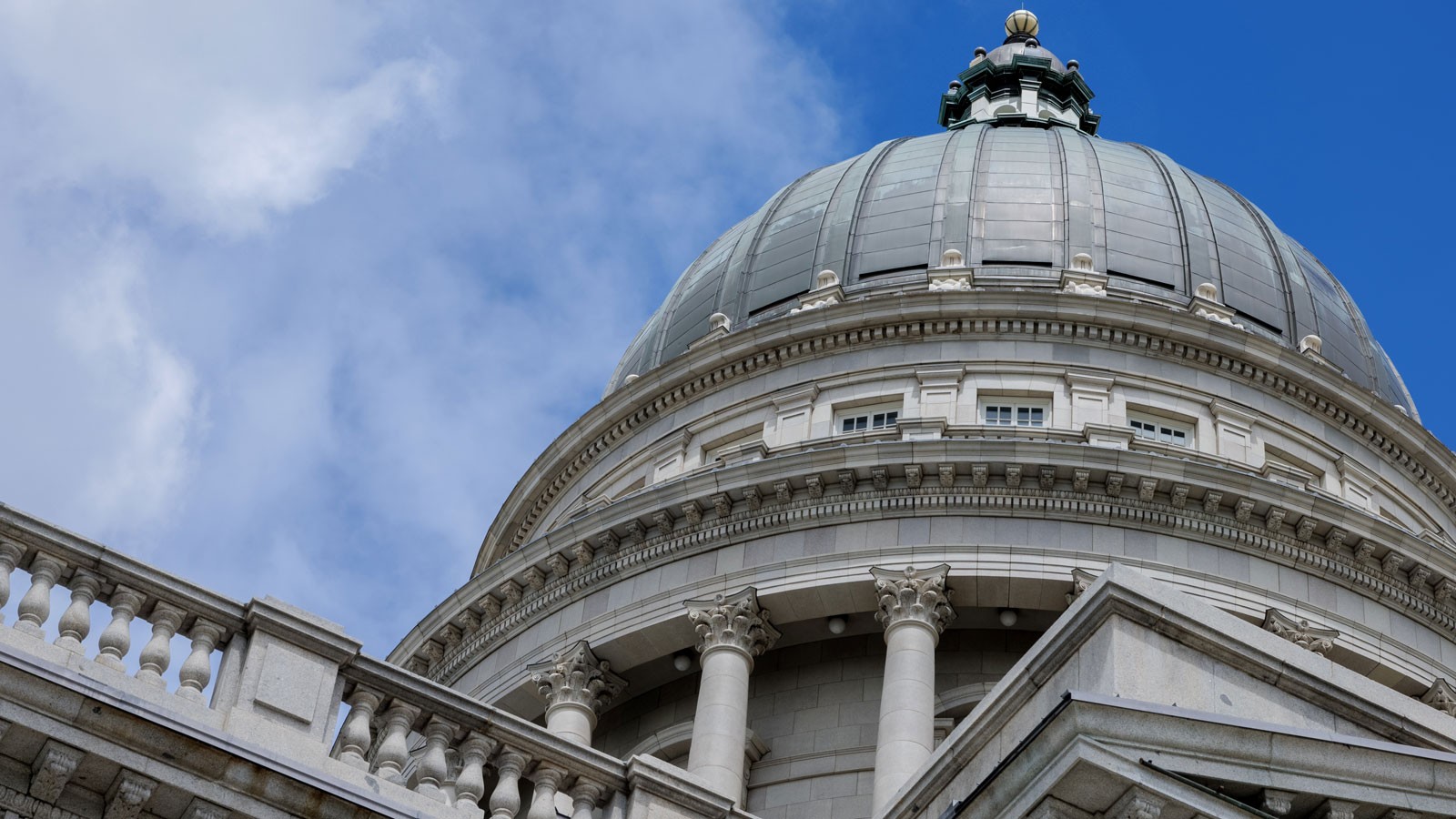
Following the close of the 2025 General Legislative Session on March 7, Utah State University reviewed the appropriations bills with direct impacts to the university, its employees and its students.
An initial summary of those actions is listed below. At the time of this publication, most of the following bills have yet to be signed by Gov. Spencer Cox. Look for more information about specific programs in the coming weeks and months.
Employee Compensation
The Utah Legislature approved a 2.5% pay increase budget for higher education employees, along with some additional funding for health and dental plan renewals in fiscal year 2026.
The pay increase budget was appropriated at the traditional 75/25 match rate for degree-granting institutions. This means the state provides 75% of the funding for salary increases and institutions like USU must fund the remaining 25% with a tuition increase or another source of funding.
USU will provide more information about how pay increases will be implemented as part of the budget planning process for the fiscal year beginning July 1.
USU Building Renovation
The Utah Legislature approved $3.5 million in one-time funding for planning and design costs for the renovation and expansion of the Animal Science Building, which will become the Utah State University’s Math, Artificial Intelligence, Data and Analytics Center.
This physical space will support collaborative work announced earlier this year to address emerging challenges in data and artificial intelligence. With this center USU plans to harness the power of artificial intelligence to address critical challenges in food security, health care accessibility, cybersecurity, and the future of mining.
Higher Education Funding
During the 2025 session, the Utah Legislature passed and Gov. Cox signed HB1: Higher Education Base Budget, which withheld 10% of the state’s budget allocation for higher education instruction. This amounts to $60 million across the degree-granting institutions in the Utah System of Higher Education and impacts Utah State University’s budget by $12.5 million.
With the passage of HB 265: Higher Education Strategic Reinvestment, each degree-granting institution must develop a two-part plan. USU must first identify components of instruction and administrative functions for reduction or elimination that meet the $12.5 million withheld in HB 1, then develop a strategic reinvestment plan that identifies components of the institution's instruction and administrative functions that merit further investment.
The USU community can learn more about the strategic reinvestment plan process and timeline at usu.edu/president/reinvestment.
The Utah Legislature also approved $20 million in new ongoing but contingent performance funding across all degree-granting institutions and $4.7 million in ongoing technical college growth funding for the Utah System of Higher Education, as well as $4 million in ongoing funding for the Talent Ready Utah Engineering and Computer Science Initiatives.
Presidential Hiring Process Changes
The Utah Legislature approved SB 282: Higher Education Hiring Amendments, which enhances the confidentiality of the presidential search process.
Moving forward, only the name of the person selected by the Utah Board of Higher Education as the next president will be made public. It is expected that the enhanced confidentiality of presidential searches will attract a broader range of candidates and expand the pool of high-quality applicants.
Residency and Tuition
HB 142: Service Member and Veteran Amendments gives active military, veterans, and their families access to in-state tuition rates at state colleges and universities regardless of residency status.
SB 17: Services for Department of Defense Civilian Employees gives U.S. Department of Defense employees and their families eligibility for in-state tuition at state universities.
General Education
SB 334: Center for Civic Excellence at Utah State University establishes a new center at Utah State to develop and pilot a new curricular approach to general education requirements and provides $551,100 in ongoing funds to support the Center for Civic Excellence.
Under this pilot program, general education will be capped at 30 credit hours and students will be required to complete courses in composition, humanities and American institutions.
If signed by Gov. Cox, the Center for Civic Excellence at USU would be required to report on its educational outcomes and impacts and provide recommendations for general education curriculum across the Utah System of Higher Education.
Student Housing
HB 269: Privacy Protections in Sex-designated Areasdefines the term “sex” for purposes of sex-segregated housing as an individual’s biological sex at birth and does not permit residents to select housing based on gender identity.
Under this new law, higher education institutions can continue to provide both sex-designated housing and gender-inclusive housing. Gov. Cox signed this bill into law on Feb. 14, 2025.
Athletics-Related
HB 479: Student Athlete Revisions requires degree-granting institutions to adopt a policy addressing abusive coaching practices. The bill also allows institutions to compensate student-athletes directly for the use of their name, image and likeness, but not with funds appropriated by the legislature or with student fees.
Higher Education Development Areas
SB 129: Higher Education Development Areas authorizes certain higher education institutions to designate a development area consisting of property owned by the institution and provides a financial incentive for higher education institutions to lease land within a designated development area.
USU Extension
HB 2: Public Education Budget Amendments transitions the funding for USU Extension’s participation in the Informal Science Education Enhancement (iSEE) program from provisional to permanent. This change provides greater stability and secures ongoing funding for the program at $225,000. USU Extension will work with the other iSEE providers as a collective to ensure outreach programming is available to schools across the state.
CONTACT
Amanda DeRito
Associate VP of Strategic Communications
University Marketing and Communications
435-797-2759
Amanda.derito@usu.edu
SHARE
Comments and questions regarding this article may be directed to the contact person listed on this page.