Ask an Expert — Where Have All the Grasshoppers Gone?
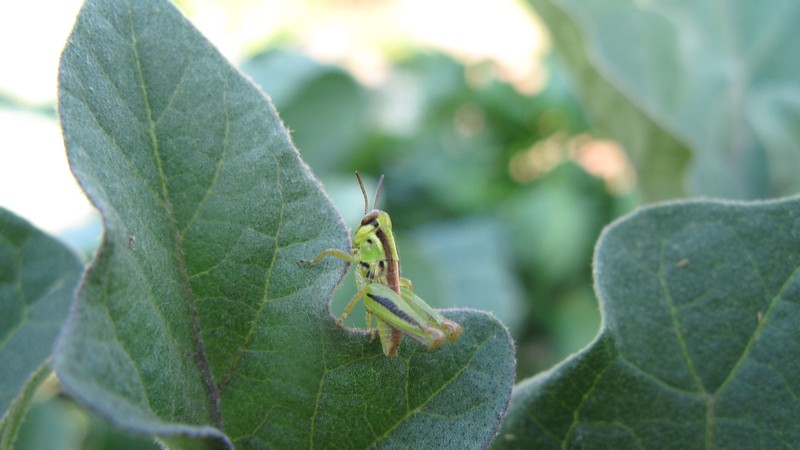
A two-striped grasshopper nymph ready to feed on eggplant. (Photo credit: Mair Murray)
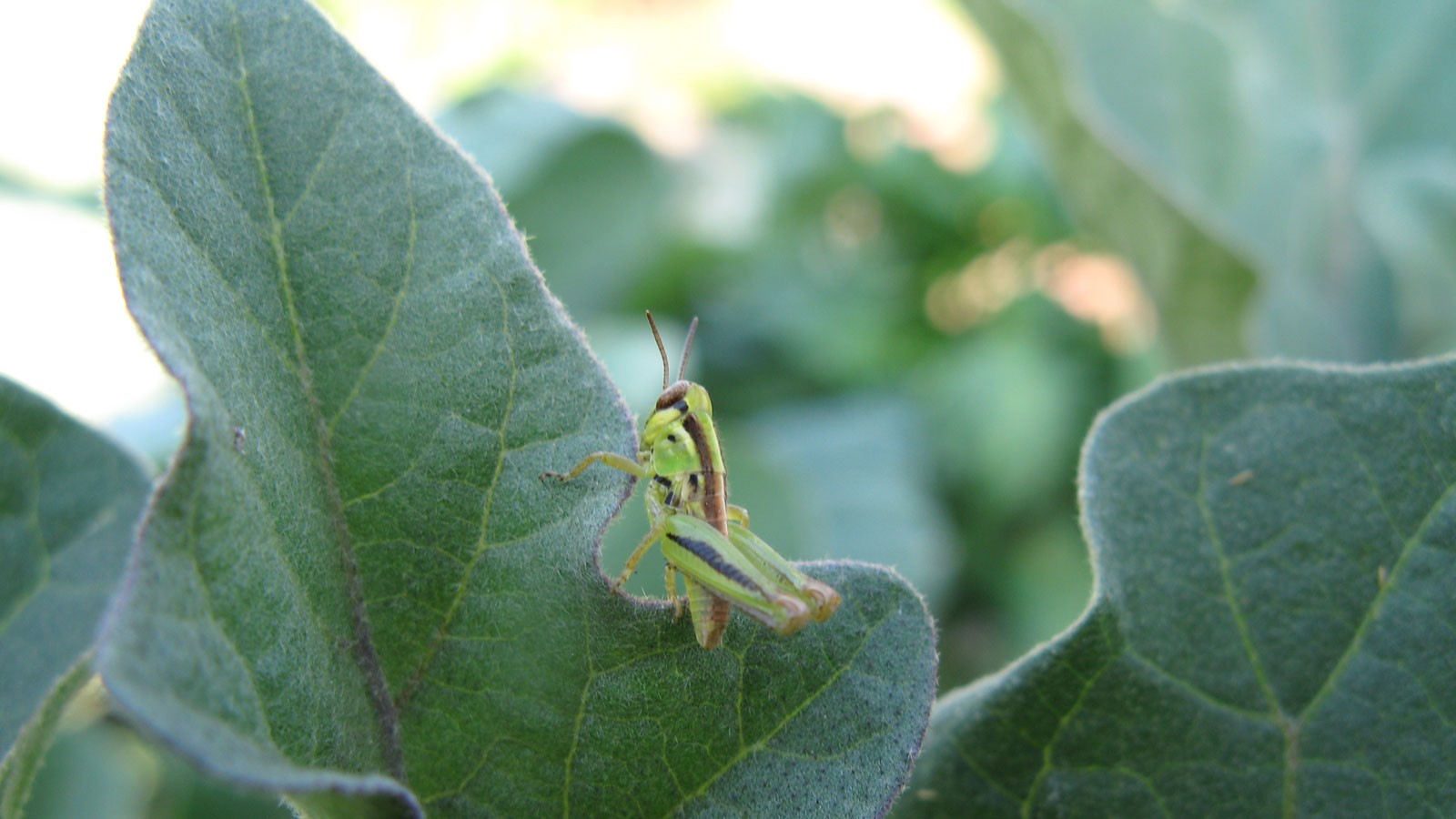
One of Utah’s most feared insect pests is the grasshopper, which has a history of severely damaging landscapes, gardens, and crops. Six or seven species regularly cause economic damage in the state. With Utah’s unusually mild winter, there was concern that grasshopper numbers would be high and especially damaging this year. Instead, across much of Utah, populations have been surprisingly low.
Why? The reason isn’t clear.
Grasshopper populations can fluctuate dramatically from year to year. In Tooele County, there is roughly a seven-year cycle where populations gradually build, reach damaging levels, and then crash. The last severe grasshopper year there was in 2024.
Predicting grasshopper infestations is far from an exact science. Many factors influence grasshopper survival, including food availability, weather during egg hatch and nymph development, predator populations, and disease-causing pathogens. These factors interact and are difficult to monitor across large areas.
While predicting outbreaks is difficult, there are several steps homeowners can take to reduce problems on their property.
- Remove weeds and plant debris in the fall and again in late spring, as these materials provide food and shelter for grasshoppers. Where appropriate, shallow fall cultivation can reduce egg-laying sites and disrupt existing egg masses, exposing them to the elements and potentially reducing the number that survive until spring.
- Maintain a vegetation-free or sparsely vegetated buffer several feet wide around gardens to discourage grasshoppers from moving into the area by reducing available food and cover during the growing season. This is particularly important in rural areas. While grasshoppers can readily cross bare ground, reducing vegetation around a garden can make the area less inviting.
- Monitor regularly. Grasshoppers readily feed on many garden plants, including carrots, onions, corn, green beans, and melons, as well as flowers such as zinnias, marigolds, and cosmos. Monitoring these and other susceptible plants can help detect increasing grasshopper activity before significant damage occurs.
- If treatment becomes necessary, focus control efforts along garden borders and other areas where grasshoppers are concentrated to reduce the need for widespread pesticide applications. Treat grasshoppers when they are young, as this is generally more effective than waiting until they become large adults.
- Select insecticides and baits carefully based on where they will be used. Products applied to vegetables and other edible crops must be specifically labeled for those plants. Follow required intervals between application and harvest. Always read and follow pesticide label directions.
Although grasshopper populations are relatively low in much of Utah this year, their cyclical nature suggests they will increase again. It’s important to maintain good sanitation, reduce favorable habitat, monitor regularly, and intervene early to be ready when grasshoppers start hopping again.
For further information, see this video on grasshopper management.
Comments and questions regarding this article may be directed to the contact person listed on this page.