New Research Explores the Riskiest Factor in Rising Wildfire Rates: People
By Lael Gilbert |
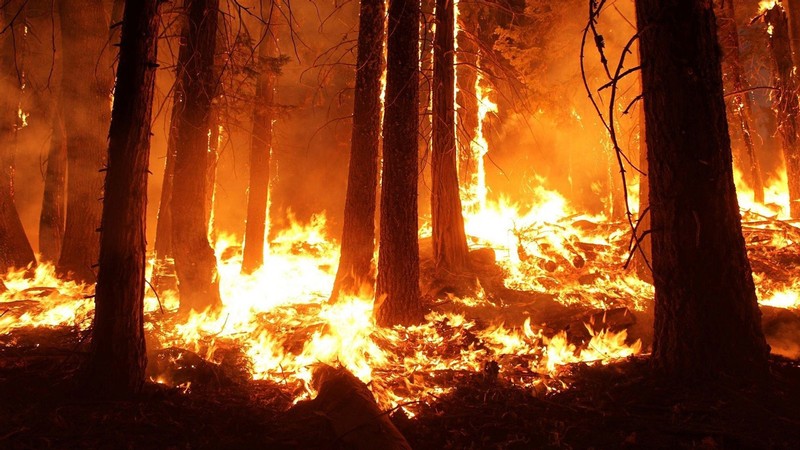
The 2013 Rim Fire started from an illegal campfire left unattended in the Stanislaus National Forest, California, ultimately burning 402 square miles including a portion of Yosemite National Park. (Photo credit: U.S. Forest Service/Mike McMillan)
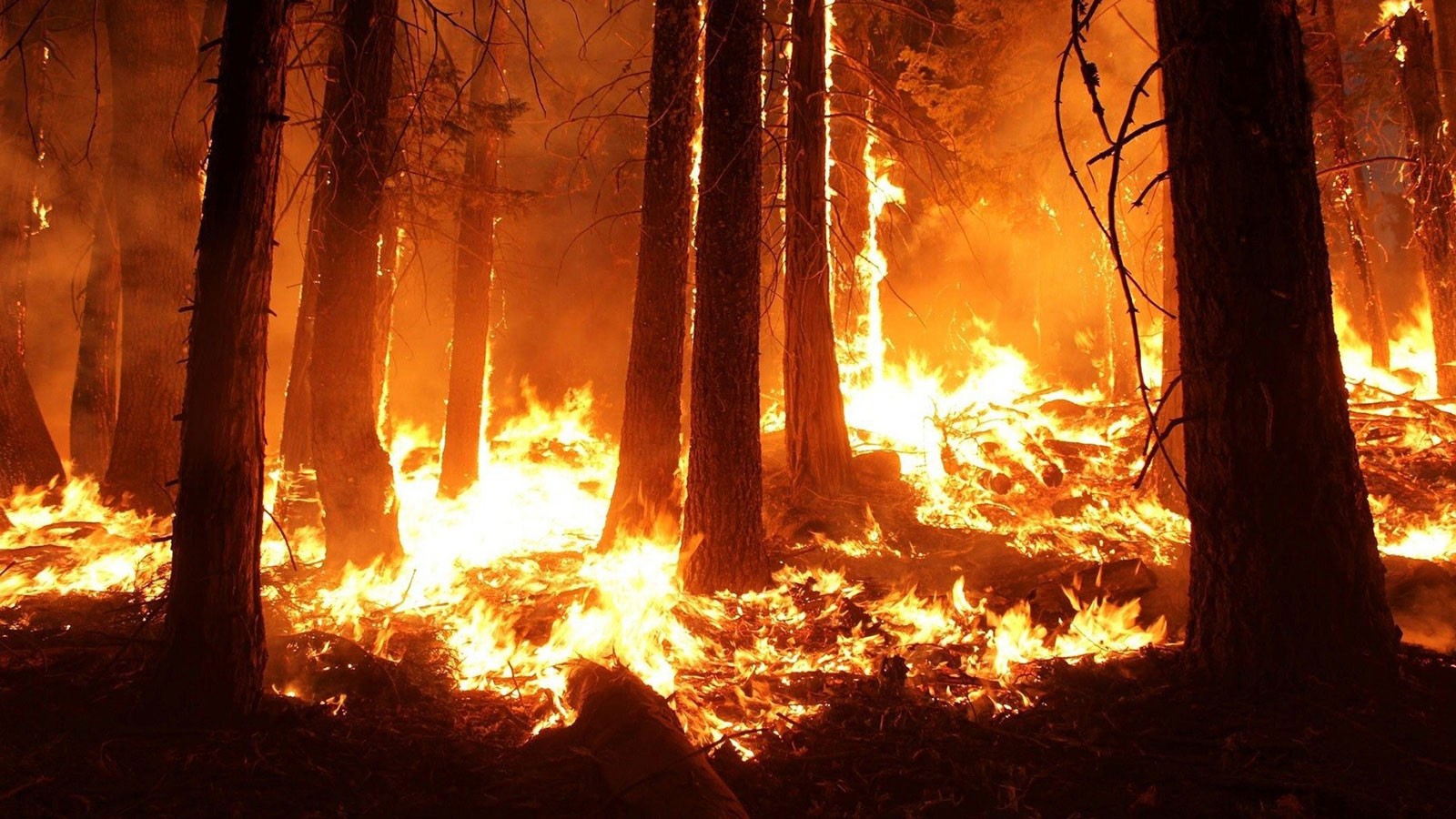
Three things are needed to start a fire: heat, fuel, and oxygen. But for the majority of destructive wildfires in the U.S., there is an overlooked fourth — humans.
Through either accident, negligence, or intentional act, 84% of all wildfires are started by people, according to research. That percentage has increased steadily over the last three decades.
Uncontrolled wildfires create staggering suppression costs, risks to lives and property, and smoke wafting across the continent. With stakes sky high, land managers are looking for strategies to reduce the number of human-ignited wildfires, said Catrin Edgeley, a wildfire social scientist in the Department of Environment and Society. Edgeley and a team of researchers published a series of studies to help managers better understand and work to reduce the number of these incidents.
Human-caused fires tend to be more expensive and more destructive than others. While lightning-ignited fires tend to occur along with precipitation to slow the spread, people tend to start fires under extreme conditions — hotter temperatures, lower humidity, and stronger winds. Human-caused fires occur in predictable patterns, often near roads and structures.
Understanding the patterns can help land managers target prevention efforts where and when they are most needed, particularly because human-caused fires can have greater potential for damage — to structures, from post-fire flooding, in danger to nearby communities, and long-term economic losses from declines in tourism.
- In the Southwest, where Edgeley’s recent work was completed, abandoned campfires account for 44% of human-caused wildfires, and 80% of those ignitions occur within a quarter-mile of a road.
- Human ignitions consistently clustered within 1.6 miles of campsites, trails, and primary roads.
- Fires started by people spiked dramatically during major holiday weekends — specifically Memorial Day, July 4th, and Labor Day when visitation surged.
- Ignition causes varied significantly by region. Arson was the leading human cause around Phoenix, whereas debris burning leads in central New Mexico.
“To make the absolute most of our funding and staff in fire prevention, we need a game plan that addresses things locally,” Edgeley said. “That means documenting what actually works based on real data for specific regions so we have a clear guide on how to step in and connect with people using public lands.”
Investing in wildfire prevention yields extraordinary return on investment. One study found that every dollar spent on wildfire prevention, education, and messaging prevented $35 in costs for damage and suppression. But prevention strategies still remain overlooked in annual budgets.
“Prevention is one of the smartest investments public land agencies can make, but suppression work has been default for so long that pivoting where money gets spent is challenging,” Edgeley said. “Understanding what is most effective and what really makes a difference in reducing human-caused fires will make that easier.”
How can land managers encourage people to take fire risks seriously? There are significant hurdles to overcome to get the right messages to the right audience in ways they can actually act on.
Organizations like the U.S. Forest Service and Bureau of Land Management use strategies like community outreach, school visits, road signs, and enforcement, but there has been almost no systematic evaluation to determine if these activities work. Edgeley is working to change that.
Her research has already uncovered some important factors that could determine future efforts.
Red Flag Warnings
Agencies routinely issue public warnings when conditions become dangerously hot and dry, encouraging recreationists to keep out of forests. In a survey of recreationists using national forests, many visitors said that they understood Red Flag Warnings — at the same time they were recreating in forests on the very days warnings were in effect.
Visitors knew the term but were often unaware how it applied to their visit, Edgeley said. Managers are working to provide clear, plain-language guidance explaining exactly what warnings mean for specific recreational activities and visitor safety.
A Wider Net
Interviews with business owners in Flagstaff, Arizona, showed that local gear shops, bike rentals, and outdoor outfitters act as trusted sources for visitors trying to understand fire rules. Visitors often asked store employees for information about fire bans and forest closures. Edgeley recommends that agencies build official partnerships with local businesses, supplying employees with easy-to-access information on current fire restrictions so they can share the information directly with customers.
Know Your Audience
The research also discovered that outdoor recreationists have distinct preferences for how wildfire prevention is practiced. Campers and backcountry recreationists wanted an engineering focus, such as metal campfire rings and access to water. Out-of-town visitors favored education, including posted safety information before they reached the forest. Local community residents showed strong support for enforcement tools such as campfire bans, permits for access, and forest stage restrictions during periods of high wildfire danger.
This study complements efforts to advance wildfire science at USU, to develop and deliver research and tools to land managers, policymakers, and communities on forest health, wildfire risk reduction, and climate-adapted forests and woodlands through the Utah Forest Restoration Institute. The organization serves as a bridge between scientific research and actual land management implementation to help restore fire-resilient ecosystems in Utah.
The lesson from focused, local data is that national, one-size-fits-all messaging alone cannot motivate changes in behavior, Edgeley said.
Edgeley will continue her work to cut the number of human-caused fires with new funding from the Joint Fire Science Program to address national wildfire prevention and investigation training needs among land management staff in federal and state agencies.
“Investing in and supporting fire prevention staff and the work they do lies at the heart of reduced wildfire risk to communities,” Edgeley said.
WRITER
Lael Gilbert
Public Relations Specialist
S.J. and Jessie E. Quinney College of Agriculture & Natural Resources
435-797-8455
lael.gilbert@usu.edu
CONTACT
Catrin Edgeley
Assistant Professor
Department of Environment & Society
catrin.edgeley@usu.edu
SHARE
Comments and questions regarding this article may be directed to the contact person listed on this page.