Q&A: Community Building, Conflict Resolution With Heravi Peace Institute Director Austin Knuppe
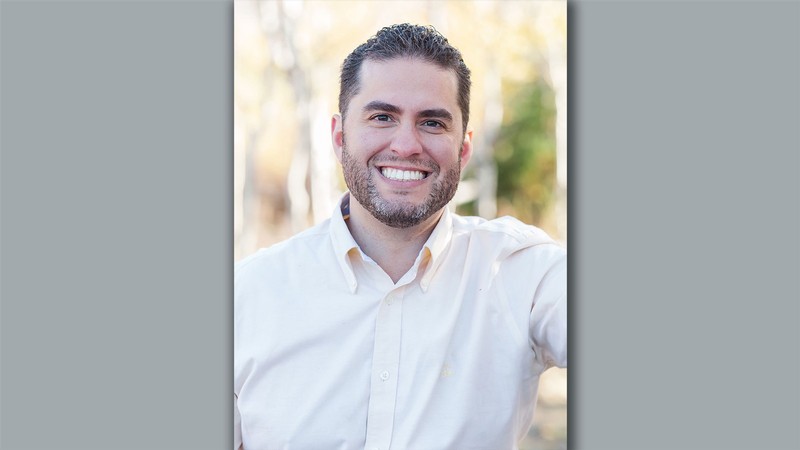
Assistant Professor of Political Science Austin Knuppe.

Austin Knuppe is the Director of Heravi Peace Institute and an assistant professor in the Department of Political Science at Utah State University. Prior to USU, he was a postdoctoral fellow at the Dickey Center for International Understanding at Dartmouth College.
He received his Ph.D. in political science from The Ohio State University in 2019. Austin is also one of the co-founders of the Conflict to Peace Lab at the Mershon Center for International Security Studies at The Ohio State University.
C2P works with local peacebuilding and development organizations in conflict-afflicted state in order to link innovative research, effective practice, and sound policy to foster durable peace. At C2P, Austin leads a research team of American, British, and Yemeni scholars studying the determinants of community resilience in conflict-affected communities across Yemen.
Q&A
Q: Political views appear to have polarized the country, but also households and families. What advice do you have for someone struggling to have peaceful conversations with family, friends or even strangers regarding political views?
A: The first step is to know what type of relationship you have with your conversation partner and whether there is a good faith effort on both sides to seek truth together.
For close relationships among family and friends, a commitment to preserving the relationship might require setting boundaries on what/how/when certain conversation topics arise. For conversation topics which are particularly fraught, I like to start off by inviting my conversation partner into a story by asking, “tell me how you came to believe XYZ.” Questions like this invite someone to share a story instead of defend a position.
Q: The "othering" of people appears to be a continued problem throughout the country. Asian hate crimes increased during the pandemic. Currently it's happening to Palestinian and Jewish communities. What do you see as a factor in this, and is there anything in particular which Utahns can look or listen for to prevent those types of incidents in their communities?
A: What we’ve seen in the United States, and elsewhere, is a growing tendency for individuals to prioritize values based on what social identity group they belong to. What results is lowering social trust across groups and even growing divides within groups over issues that threaten the core values motivating why my in-group is superior to other out-groups. Over time, social spaces become more balkanized and you’re less likely to encounter people from the out-group, either in online or face-to-face spaces.
One of the most successful interventions for growing polarization is to seek out shared spaces where people from different social groups participate in a shared activity or goal. In a place like Logan, this can occur on the sideline of your kid’s soccer game, an event at USU’s campus, or even a cooking class at “Love to Cook” (one of my personal favorites). While it might not be in any individual’s direct control to prevent hate crimes, building sustainable relationships with people different from us helps keep our community’s social immune system healthy.
Q: What lessons and/or practices are taught in the Heravi Peace Institute to help students gain a better understanding of, and find common ground with people from different countries or with different religious beliefs? How can they be applied to our everyday lives?
A: At the Heravi Peace Institute, we have several programs and initiatives aimed at precisely this goal. Our Interfaith Leadership program, led by Dr. Bonnie Glass-Coffin, offers regular workshops aimed at exploring religious difference.
Prof. Clair Canfield’s Conversational Space-Makers provides students, faculty, and staff with a basic relational toolset for navigating interpersonal relationships based on religious or cultural differences.
Prof. Chad Ford is spearheading our effort to offer mediation training (inside the classroom and beyond) to Utah residents. HPI also has an incredible faculty board who offers study abroad opportunities to Rwanda, Bosnia, Cuba, Northern Ireland, and Vietnam/Cambodia where not only students but also community members can explore these dynamics in real time (a very affordable “nerd vacation” for our alums, donors, and community members).
Better yet, if you get to chance to talk to USU alumnus and HPI patron Dr. Mehdi Heravi, have him explain his life story and how he’s approach bridging religious and cultural differences.
Q: Utah is home to more than 6,500 refugees from more than 40 countries, according to Utah Refugee Connection. How can Utahns learn more about the cultures of those refugees who now call Utah home, and what can we all do to be understanding of those who are different from us living in our communities?
A: Within Cache Valley, one of my favorite organizations is the Cache Refugee and Immigrant Connection (CRIC). One of my former students works as an intern who offers basic English-language tutoring, as well as a weekly, Wednesday afternoon coffee/tea hour for people to come together and explore each other’s stories (as well as work on their foreign language acumen.
USU’s student, faculty, and staff community — in Logan and statewide — also has an incredible representation of international students and scholars. Welcome these colleagues into your home for a family meal or gathering, especially if it’s around the holiday season. Finally, take some time to explore an immigrant or refugee-owned small business or restaurant. One of my recent favorites here in Logan is Habibi Mediterranean on Federal Avenue.
Q: How has the rise in social media use attributed to conflict, and what can be done to improve the situation and create a safer place for people from all backgrounds?
A: One practical way to improve our engagement online is to find spaces which are not engineered to generate outrage, contempt and disgust. Places like Substack or Tangle have become great platforms for curating writing from several different perspectives on complicated social, economic, and political issues. One of my practices is to curate a list of trusted sources from across the spectrum, so when I explore an issue beyond my professional expertise, I know whose point of view is trustworthy.
I’m also a big fan of Andy Crouch’s The Tech-wise Family, for practical tips surrounding digital hygiene and family life.
Q: Is there anything being done in Utah, or with the Heravi Peace Institute specifically, which can be used as guide for other states to bring more peace and understanding to all people across the country?
A: As I’ve mentioned above, come visit us at the Heravi Peace Institute — either online or face-to-face. Come join us for an event, workshop, training, or study abroad experience. Better yet, support an HPI student and learn the impact that USU is having on their personal and vocational trajectory.
CONTACT
Austin Knuppe
Assistant Professor
Department of Political Science
435-797-0919
austin.knuppe@usu.edu
SHARE
Comments and questions regarding this article may be directed to the contact person listed on this page.