Scholar-Teacher Leonard Rosenband Wins Prestigious Mentoring Award
Leonard Rosenband, professor of history in Utah State University’s College of Humanities and Social Sciences, has strong feelings about teaching.
“I care about the classroom,” he said. “And I’ve taught with all of my soul and all of my passion and all of my heart. I’ve never wanted to do it in a half-way fashion.”
With such sincere dedication, it’s no wonder Rosenband recently was announced as the recipient of the 2014 Nancy Lyman Roelker Mentorship Award. The award honors “teachers of history who taught, guided and inspired their students in a way that changed their lives.”
The honor, a national award presented by the American Historical Association, is bestowed on a three-year cycle that rewards in turn, graduate mentors (including combined graduate and undergraduate teaching); secondary school teachers; and undergraduate mentors (both two-and four-year colleges), for which Rosenband won.
Of course, many educators have lofty teaching aspirations, but for Rosenband they are a given. Former students speak of a passion for history brought into the classroom each and every day … unfailingly.
But Rosenband is humble about his ability to connect with students and make the long ago lives of historical figures become real and immediate to 21stcentury students.
“The only physical apparatus I use in the classroom is a map,” he explained. “Otherwise I use my learning and the power of narrative. Narrative is the great strength that historians have at their disposal.”
Rosenband’s narrative, however, does not consist of standing behind a lectern spouting historical timelines.
“It’s common to see his six-and-a-half foot frame, shoes removed, practically dancing across the front of the room as he explains a concept,” said Tammy Proctor, head of USU’s College of Humanities and Social Science’s Department of History.
Rosenband explains simply that he is “passionate” about the things he teaches.
“I try to teach what it was like to live for the vast majority of the population in the past,” he said. “Whether they were liquidated in the Holocaust, fought in the trenches in World War I, labored 12 hours a day, six days a week in early factories, or survived giving birth, that’s what I talk about.”
And although modern teaching philosophies may be elaborate, steeped in intricate theoretical notions and dusted with psychological insights, Rosenband’s teaching philosophy — or lack of philosophy — is simple.
“If I do have a teaching philosophy, it’s one sentence,” he said. “I try to help students to do better with their minds; to think more clearly and more profoundly than they ever imagined they were capable of.”
That simple philosophy has influenced the academic careers and lives of generations of students.
Rosenband, who received his doctorate at Princeton University, began teaching at Utah State in 1983. For more than 30 years, he has taught an undergraduate Survey of Western Civilization course along with an undergraduate class on the French Revolution that has a continual waiting list. He also teaches senior and graduate seminars.
“Not only has he [Rosenband] carried a heavy load of undergraduate general education survey teaching over the course of his career, but he has maintained consistently excellent evaluations and continued to be a productive scholar,” Proctor said.
To say he has continued to be a productive scholar is an understatement nearly as large as Rosenband’s towering frame.
A world-renowned French Revolution scholar, Rosenband has written and co-written several books and papers. Both critics and academics have lauded his written efforts. Rosenband’s book, Papermaking in Eighteenth-Century France: Management, Labor, and Revolution at the Montgolfier Mill, 1761-1805, published in 2000, looks at workers, employers, innovation and competition in pre-revolution France. The book was acclaimed not only for “fundamental challenge to many orthodox methods and conventional approaches in economic history and the history of technology”, but also for its “evocative imagery and lively narrative,” according to Andre Wakefield of Pitzer College who reviewed the book.
Such scholarship is the norm for Rosenband, who will retire from teaching this year to concentrate on writing.
“Teaching is editing. Taking the vast amount of knowledge that every scholar has and fitting it into a very compressed amount of time,” Rosenband explained. “Writing is teasing out. And I can’t do the two mindsets together.”
Rosenband said his retirement will allow time to write a companion book to his “Montgolfier Mill” volume among many other projects he has in mind.
The idea of bringing his ideas to life is exciting to Rosenband who is anxious to get to work. But the College of Humanities and Social Sciences, along with all of Utah State, will miss his classroom presence greatly.
“Professor Rosenband is an excellent example of a high caliber scholar/teacher,” said John Allen, dean of USU’s College of Humanities and Social Sciences. “He represents our continual goal to hire high quality scholars who have excellent teaching skills. We are very fortunate that professor Rosenband chose USU to make his career.”
Rosenband knows ending his teaching years at Utah State will be difficult, but believes the timing is right and that Dean Allen and USU now have an opportunity to hire another excellent teacher-scholar. Still, it’s not an easy transition to make.
“I’m going to miss Utah State,” he said. “What Utah State gave me more than anything else, is a career. It gave me a chance to teach and a chance to do scholarship, and I’ve enjoyed it. I’m going to miss the classroom. It’s just that way. But at the same time, it is also wise to leave before you have to leave.”
Related links:
- The American Historical Association, Nancy Lyman Roelker Mentorship Award
- USU History Department
- USU College of Humanities and Social Sciences
Writer and contact: Kristin Middaugh, 434-797-0267, Kristin.middaugh@usu.edu

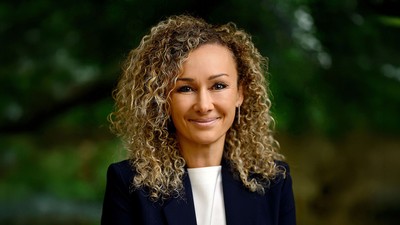
History professor Leonard Rosenband is the recipient of the 2014 Nancy Lyman Roelker Mentorship Award.
TOPICS
Awards 862storiesSHARE
Comments and questions regarding this article may be directed to the contact person listed on this page.