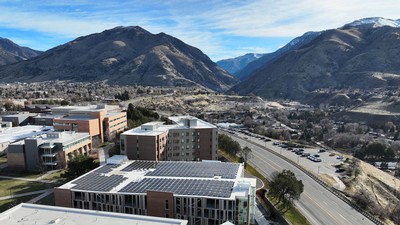
Talking Trees Project on USU Campus Assisted With Education, Connection
By Julene Reese |
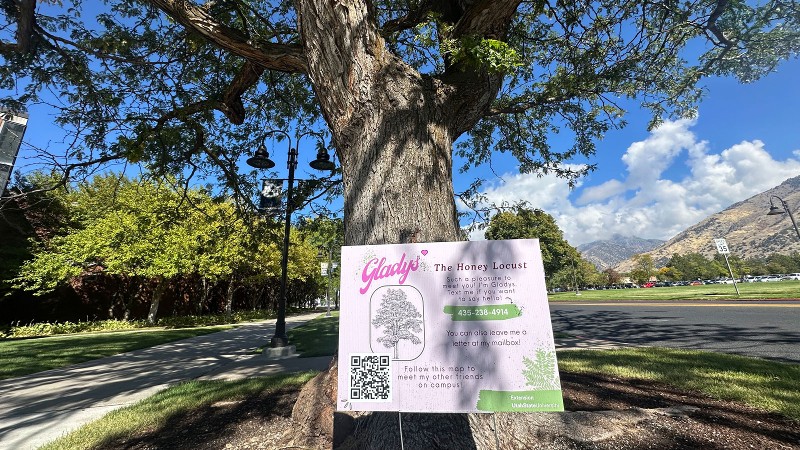
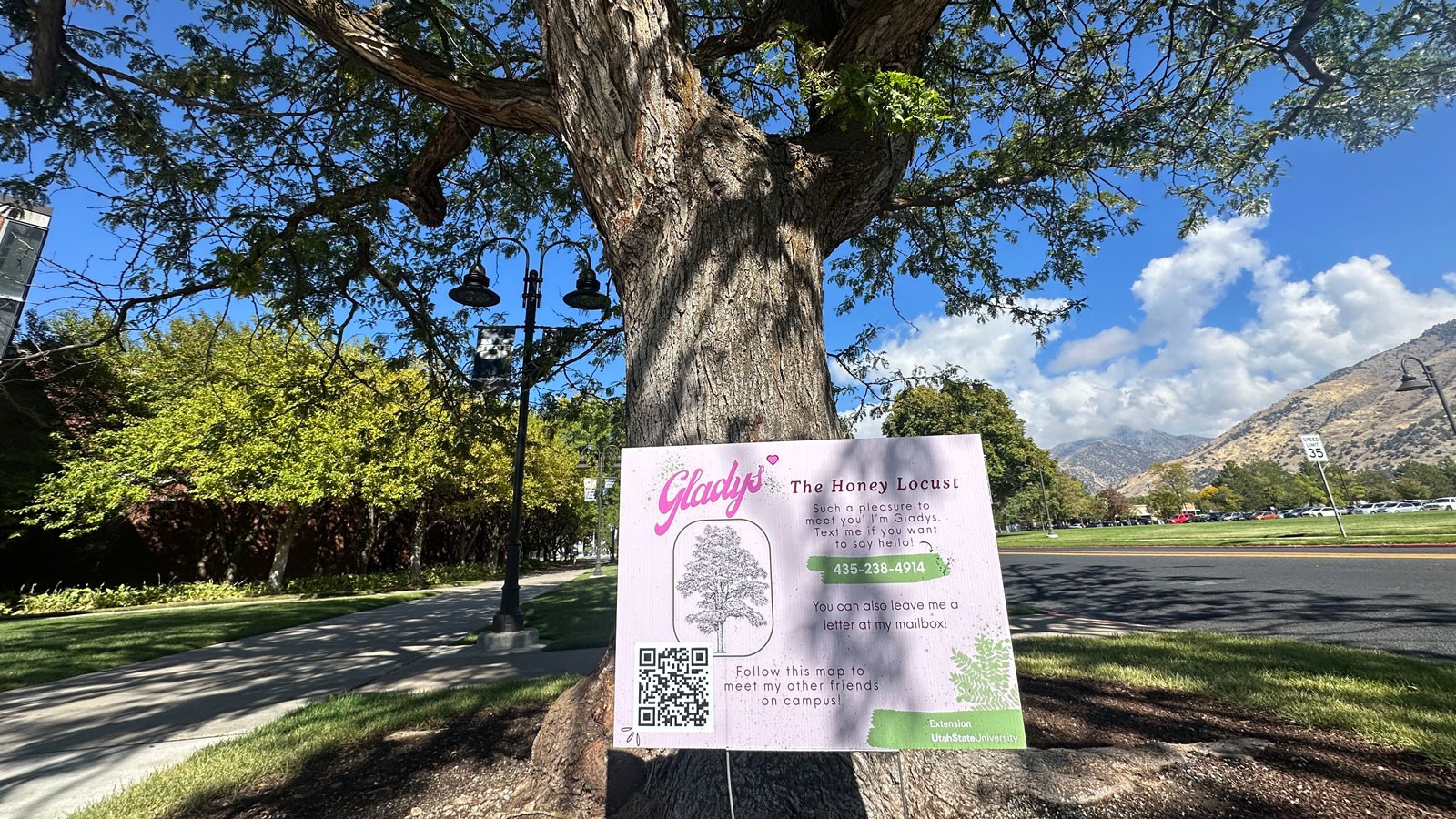
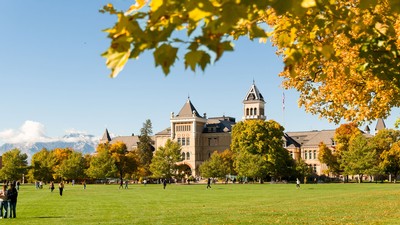
Every tree has a story, and 11 trees on the Utah State University campus in Logan found their voices through the Talking Trees project earlier this fall.
Rayna Becker, USU landscaping lead, chose 11 trees and gave each a name, personality, and phone number for people to text. The trees would text back and kept the conversation going. In addition, there were also two wish trees where people could write a note and hang it for passersby to see. Tree response times for answering texts varied according to their sleep schedule and photosynthesizing routine.
According to project organizer Miles Becker, USU Extension urban forestry specialist, the goal of the project was to increase pride in the environment by connecting with other community members through trees in the local landscape.
“All too often, we pass by one another and the world around us without noticing any of it,” he said. “This project provided an opportunity to slow down, say hello, learn something new, and enjoy a quick break.”
Becker said 14 volunteer students kept the tree project running behind the scenes and worked to keep it fun and functional. The students came from five departments on campus. Rayna Becker coordinated the student team using her knowledge and experience with campus plants and trees. The 11 talking trees represented only a small number of the more than 7,000 trees that help beautify the USU campus.
Students from the Center for Creativity, Innovation and Discovery Charter School in Providence paid a visit to campus and brought a list of questions they compiled for the trees. Some included:
How are you doing today? Do you have houses for magical animals? Why do your leaves change color? Can I help you? How do you eat food? Do you like chicken nuggets, and do you play Minecraft? What’s the coolest thing you’ve ever seen? When were you born? Who is your best tree friend? What’s your favorite animal? Do you get sad when people cut you down? What do you eat in the winter? Do you dress up for Halloween? What is your favorite dessert? What do you like to do with your friends? Do you ever get mad? Do you go to school? What is your favorite season? What do you smell nearby? Do you ever see tractors around?
“Their questions were playful and thoughtful, showing any age group can connect with trees,” Becker said. “This project is a prototype that will hopefully be replicated on other USU campuses and in communities statewide. It could be used to celebrate a town’s history, add an interesting element to an event, or even help heal from destructive events like wildfire or public violence.”
Becker referenced the survivor tree from Ground Zero at 9/11 in New York City and the giant banyan tree in Lahaina, Maui, after a wildfire destroyed the town.
“Both trees became symbols of hope and memorials to what was lost for the people in those locations,” he said. “The trees gave people a way of doing something that they couldn’t do on their own. Because trees play such an important role in our communities, we hope this project strengthens people’s connections to the places they live.”
Becker said that the trees are no longer talking as they go dormant for winter, but people can still visit them. The mapshows where each tree is located and information about it.
For further information or to host a talking tree experience, contact Becker at miles.becker@usu.edu.
WRITER
Julene Reese
Public Relations Specialist
Extension
435-757-6418
julene.reese@usu.edu
CONTACT
Miles Becker
Urban Forestry Extension Specialist Assistant Professor
Utah State University Extension
Miles.Becker@usu.edu
SHARE
Comments and questions regarding this article may be directed to the contact person listed on this page.