

Exploring How We Teach
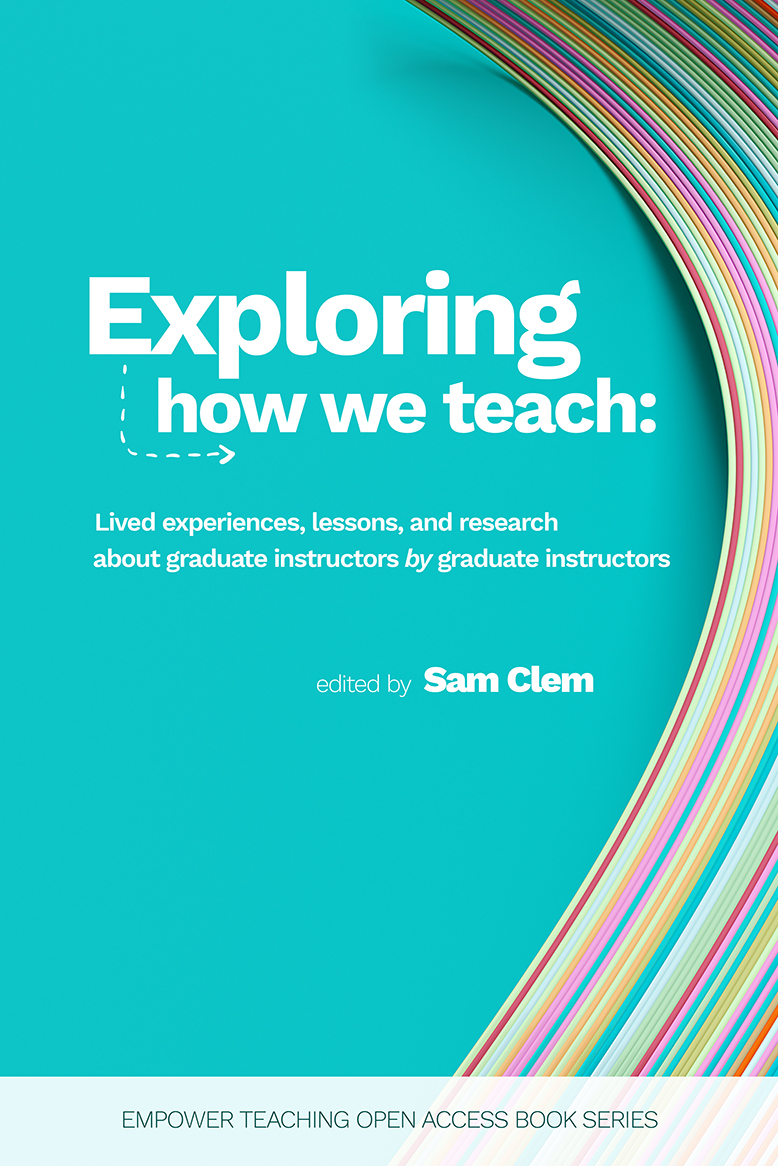
Exploring how we teach:
Lived experiences, lessons, and research about graduate instructors by graduate instructors
Edited by Sam Clem
As the second book in the Empower Teaching Open Access Book Series, Exploring how we teach seeks to create a knowledge-sharing resource that validates and amplifies the experiences and voices of graduate student instructors. The collection encompasses the many titles, responsibilities, and levels of autonomy that graduate student instructors hold. The authors, all graduate students at the time of writing, interrogate issues of identity, community, and vulnerability within the context of college teaching, all while providing the reader with concrete takeaways to apply in the classroom. We hope that this collection can support the professional development of graduate students across disciplines, institutions, and levels of teaching experience.
Table of Contents
While being a graduate instructor who exists within a liminal state comes with its own set of challenges, it also comes with unique characteristics that allow for meaningful engagement with ourselves, our students, and the entrenched institutional practices.
Global Impact
Total Downloads
Book Details
Recommended APA Citation
Clem, S. (Ed.) (2022). Exploring how we teach: Lived experiences, lessons, and research about graduate instructors by graduate instructors. Utah State University. https://doi.org/10.26079/da16-f285

If, as I assert, teaching for Black girls necessitates that educators engage their students as co-creators, co-witnesses, and co-conspirators, then a radical re-articulation of learning through the interrogation of educational norms and standards must also ensue.
Emphasizing the relationship between the educator and the student as fellow learners lets us recognize that both are resilient and can grow from failure.
About Empower Teaching Open-Access Series
The Empower Teaching Open-Access Book Series features a variety of peer-reviewed books focused broadly on the multi-disciplinary work of teaching in higher education. Books in the series align with the mission of the Center for Empowering Teaching Excellence (ETE) to bolster the culture of teaching excellence for students, staff, faculty and administrators. The books in this series share insightful and innovative perspectives on teaching and learning, and through a partnership with USU Libraries the books are offered in an online and open-access format to amplify the voices of authors and contributors in the series.