Branching Out: USU Salt Lake to Plant 100 New Trees on Campus
By Marcus Jensen |

USU Salt Lake student Bob Copenhafer designed and lead the tree planting project at USU Salt Lake.
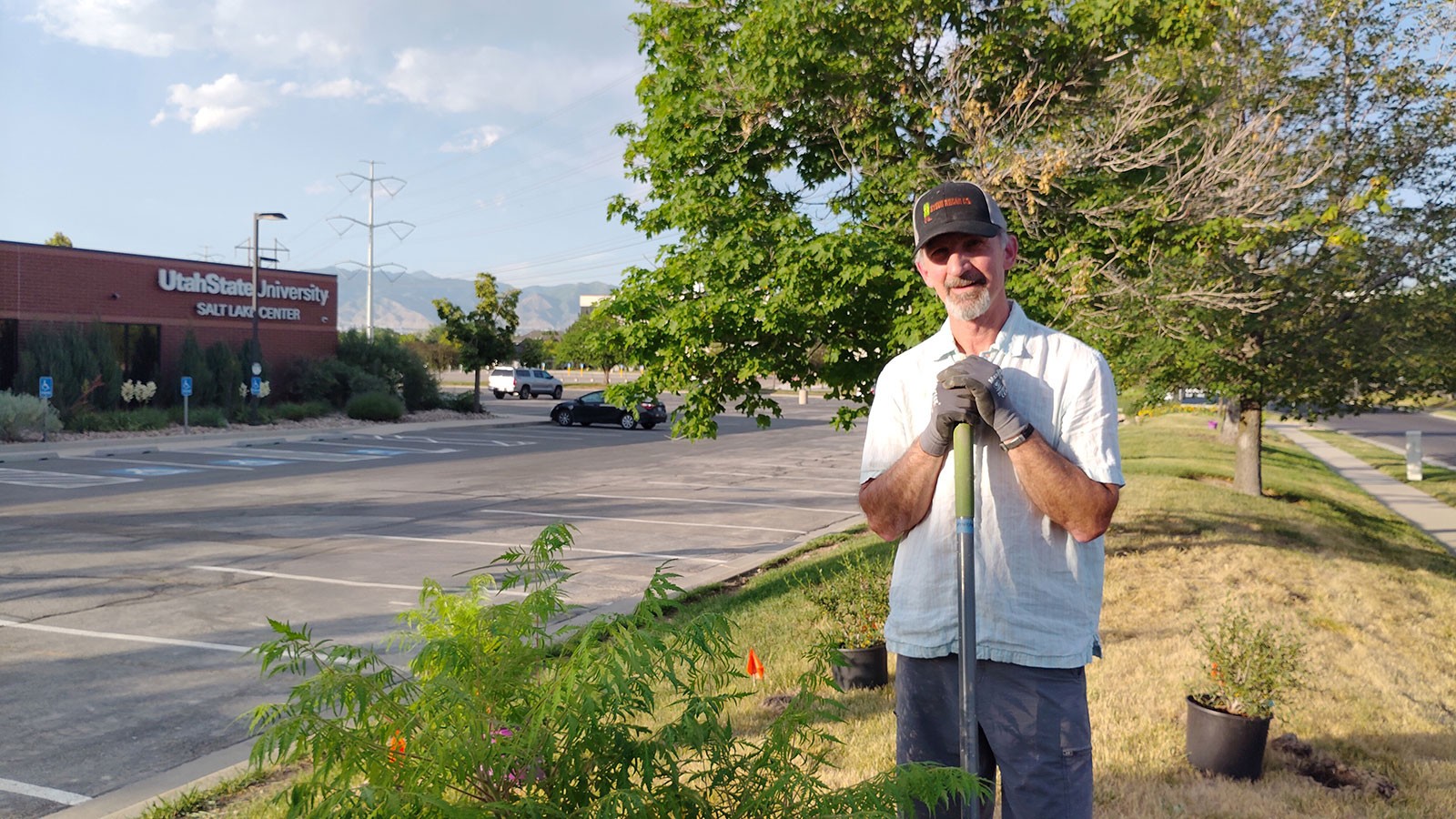
TAYLORSVILLE, Utah — Although they say money doesn’t grow on trees, a grant is allowing the Utah State University Salt Lake Center to add nearly 100 trees to campus.
The $15,000 Community Forestry Partnership Grant is from the Utah Division of Forestry, Fire & State Lands, in partnership with the U.S. Forest Service. This program is part of a statewide initiative to support urban forestry projects across Utah. Rachel Broadbent, senior lecturer and horticulture program coordinator at USU Salt Lake, applied for the grant.
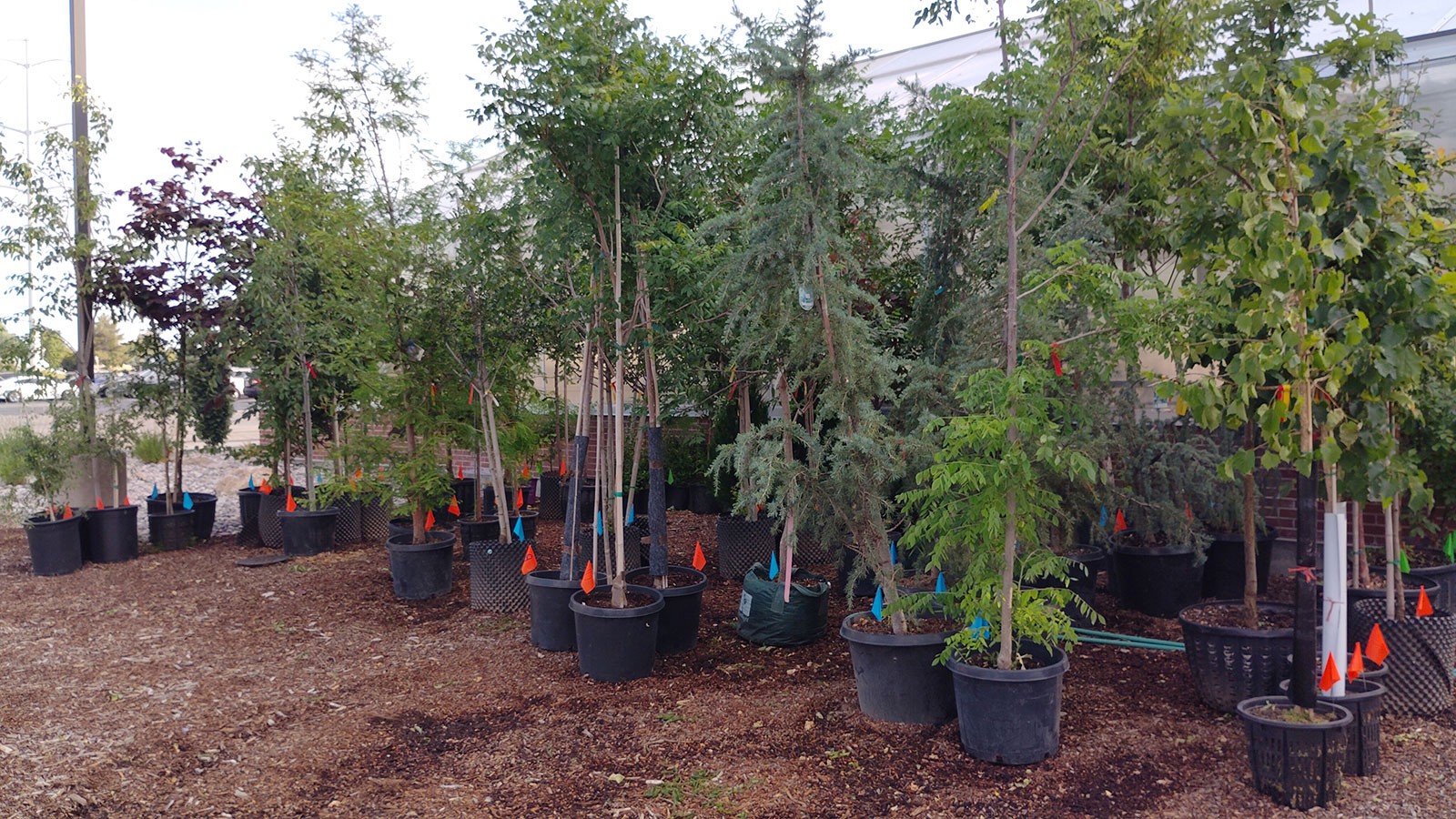
So far, volunteers have planted 20 trees with the goal of planting the remaining lot prior to the end of the 2025 fall semester. The trees will serve as a living classroom for students.
“These trees will be an excellent addition to the USU Salt Lake Center and will provide an educational space for our students,” Broadbent said. “We have planted various species, and these will allow students the opportunity to learn how to identify different tree species as well as learn tree care. We are grateful to have received this grant.”
Two student interns, Bob Copenhafer and Katrina McCullough, played key roles in the project. Copenhafer designed the landscape to benefit wildlife, improve the environment and create an inviting campus space. He collaborated with Broadbent and Senior Associate Vice President David Vernon to finalize details and submit designs for approval. He also participated in the selection and planting of trees.
“I was responsible for creating and providing a landscape design and for helping choose the trees to use in the design,” Copenhafer said. “The completed design was submitted to multiple experts and various project stakeholders for review and feedback. I am very happy with the results.”
McCullough contributed by testing soil pH levels across the area to determine the most suitable tree species for each location. She created a list of trees that could be planted and provided cost estimates and coordinated with local nurseries to ensure availability and affordability of the chosen varieties.
“I researched trees that would grow well and give the grounds a large and assorted variety of trees for students to learn and study right on campus,” she said. “The goal was for students to be able to learn proper tree identity, pruning and maintenance, as well as enhancing the campus for all students and visitors to enjoy.”
Vernon was excited to learn about the grant, because he envisioned not only an arboretum for students to learn, but a location for people to gather outdoors.
“Rachel is always finding opportunities to make our campus her classroom, connecting students to impactful, hands-on projects,” Vernon said. “This grant not only allows our horticulture students to engage in the planning, design and planting of these trees, but it also supports students like Bob, who is pursuing a second career in landscape design and has already applied his skills to design a landscape plan for the project.”
McCullough graduated with her bachelor’s degree in May. A non-traditional student, she worked for several years to obtain her degree while balancing life with four kids at home. She was grateful to have this internship experience and for her entire return to school after years away.
“I had a great experience going back to school as a mother of four kids,” she said. “I loved learning and I loved the small class sizes with the personal attention from the teachers and the good friends made in class. Everyone was very supportive. I look forward to a future job in horticulture.”
Copenhafer will graduate at the end of the summer semester. He returned to school after initially graduating with a biology degree in 1989. He looks forward to establishing a career as a landscape designer.
“My experience at Utah State Salt Lake was tremendous,” he said. “The faculty are wonderful, and the facilities are clean and modern. I enjoyed learning the material and interacting with other students. Everyone was helpful and made it a personal responsibility to ensure the students are successful.”
With locations in Salt Lake City, Orem, Park City and Heber, Utah State University’s Wasatch Region offers students the personalized attention and small class sizes of a small-town college with the resources of a large university. With degree options ranging from associate to doctorate degrees, plus technical education offerings, USU offers programs that help fuel local economies and empower individuals and their communities. Learn more at statewide.usu.edu.
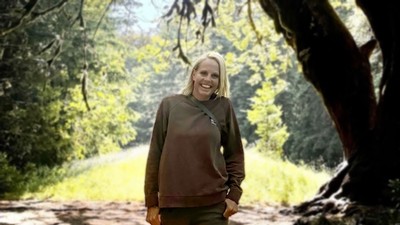
Katrina McCullough tested soil pH and coordinated with local nurseries to obtain the trees.


Over 80 trees and bushes will be planted on the USU Salt Lake campus throughout the summer and fall.
WRITER
Marcus Jensen
News Coordinator
University Marketing and Communications
marcus.jensen@usu.edu
CONTACT
Rachel Broadbent
Program Coordinator, Horticulture
Department of Plants, Soils, & Climate
rachel.broadbent@usu.edu
TOPICS
Statewide Campuses 520stories Hands-on Learning 332stories Plants 249stories Internship 66storiesSHARE
Comments and questions regarding this article may be directed to the contact person listed on this page.