USU Professor Receives Outstanding Young Scientist Award for Dairy Science Research
By Ethan Brightbill |

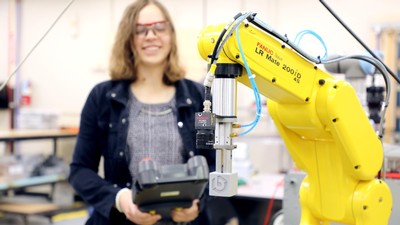
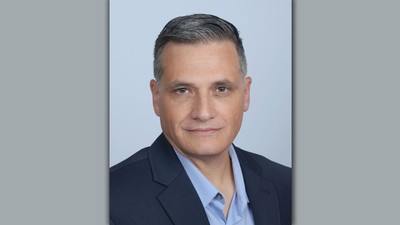
USU Associate Professor Prateek Sharma, left, has been named the Institute of Food Technology's Outstanding Young Scientist of the Year for his significant contributions to the field, particularly in dairy food science. Sharma has also mentored many undergraduate and graduate researchers, including Sulthana Humayoon Muttathukonam (right). (Photo credit: USU/Bronson Teichert)

When Associate Professor Prateek Sharma was recognized with the Samuel Cate Prescott Outstanding Young Scientist Award from the Institute of Food Technologists (IFT), an international society of food scientists, his department head, Professor Heidi Wengreen, was proud but not surprised.
“Prateek has a genuine excitement for learning and discovery in dairy science,” she said. “He cares deeply about the structure of cheese because he knows it matters to the dairy industry and to anyone who simply wants their cheese to taste great and melt just right. He creates meaningful research opportunities for students and takes pride in mentoring the next generation of dairy scientists. We are so proud to see his passion and hard work recognized with this award.”
The award is given to one food scientist each year who has made significant contributions to the field within a decade of attaining their highest academic degree. Sharma received it at IFT First, the world’s largest food science and innovation expo earlier this year.
Sharma’s research focuses on improving the quality of dairy foods through a combination of chemistry, physics, engineering and a dash of microbiology.
“More than 50 percent of my research is in the area of cheese processing, chemistry and technology with the remaining percent in areas like fluid milk, dairy powders and whey,” Sharma said. “What I try to do is use the principles of material science to improve the quality of dairy products and the efficiency of dairy processing operations.”
When asked to provide examples of his work, Sharma is delighted to supply them. He has co-authored numerous papers on mozzarella alone, and he can speak at length about how the formation and destruction of chemical bonds translates into the meltability and stretchability of cheese on a slice of pizza or the precise combination of heat, protein, sugar, moisture and beneficial bacteria needed to achieve a Maillard reaction and the perfect level of browning.
His research also has numerous practical applications for the food industry. For instance, when cheddar cheese is mass produced, it often comes in massive blocks weighing hundreds of pounds that are then processed in different ways to make slices, shreds and cubes. However, the physical properties of a particular block of cheese affect how well it can handle passing through machines that transform it into products consumers are familiar with. Cheese that’s particularly sticky or fragile can lead to gummed up machinery and a loss of product, so there’s considerable money to be saved if manufacturers can identify the properties of cheese early on.
“Slicing is a premium product, so if cheese is really good for that, then businesses would like to make slices first,” Sharma said. “If it’s not good enough for slicing, then the second preferred operation is shredding. And if cheese isn’t suitable for either of those operations, then it gets processed into other products, which is a low-value application. If I’m able to develop a predictive model for the cheese, manufacturers can determine beforehand what should be done with a block to save time and reduce material loss.”
In addition to his own research, Sharma has also recently taken on a new role: director of the Western Dairy Center (WDC), a network of nine universities in Utah, Idaho, Oregon and Washington. With support from Dairy West and the Dairy Checkoff Program, WDC coordinates dairy research, provides the dairy industry with access to university researchers and resources, offers courses on subjects like small-scale cheese or ice cream production to entrepreneurs and hobbyists, and facilitates the Build Dairy program. The latter helps educate the next generation of researchers to meet the current and future demands of the dairy industry, Sharma said.
“Build Dairy connects professors, students and businesses together to identify real issues in the dairy industry,” he said. “For instance, a professor might develop a project proposal to solve a problem in consultation with the dairy industry and identify a student who then works on that problem. It’s student-centric training that facilitates research while also providing the industry with highly skilled scientists in the Intermountain region.”
Sharma dedicated his award to the people and organizations who helped him succeed in his research and his role as director of the WDC.
“I’d like to thank my students as well as my mentors and role models, including Professor Peter Munro (formerly of Massey University), Professor Emeritus E. Allen Foegeding (North Carolina State University), Professor Donald McMahon (formerly of Utah State), and Dr. Eric Bastian (vice president for Dairy West) for their support and guidance, as well as the USDA-NIFA, DMI, BUILD, NSF Convergence Accelerator, U.S. Department of Energy, USU, and other organizations who supported my research program at USU. And last but not least, I would like to thank my family, including my parents, brother Yogesh Sharma, my wife Bharti, son Pratham, and daughter Prabha for their patience and support throughout my scientific journey.”
WRITER
Ethan Brightbill
Writer and Marketing Assistant
College of Veterinary Medicine
Ethan.Brightbill@usu.edu
CONTACT
Prateek Sharma
Associate Professor, Food Scientist
Department of Nutrition, Dietetics and Food Sciences
435-797-0791
prateek.sharma@usu.edu
SHARE
Comments and questions regarding this article may be directed to the contact person listed on this page.