
Climate Adaptation Science News
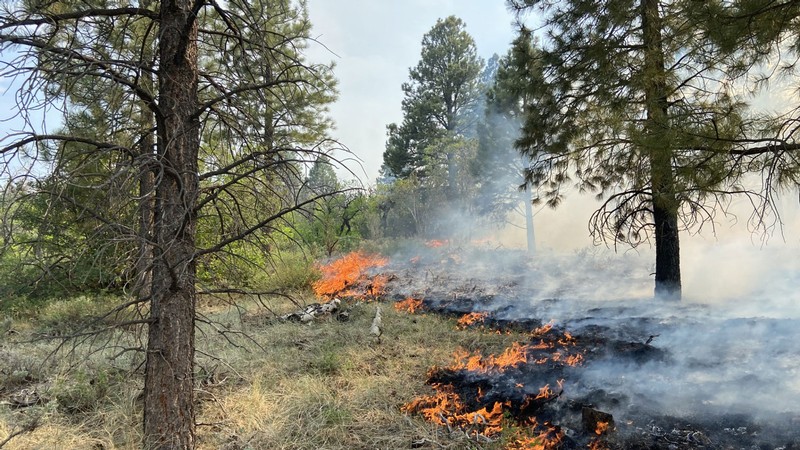
Ask an Expert: Monsoons Could Impact Utah Wildfire Season
Utah entered the 2026 fire season with record-low snowpack and heightened concerns about wildfires, which are already burning across the state.

Over 260 Global Scientists Unite on Urgent Call for Wildlife Protection for Sake of Climate
Trisha Atwood in USU's Department of Watershed Sciences is part of the global effort that resulted in a call on governments to explicitly include wildlife and their ecological roles in climate policy.

USU Researchers Explore Mini Vegetable Plants for Urban Agriculture
As cities grow and farmland becomes increasingly distant from consumers, Utah State University researchers are exploring innovative ways to bring food production closer to home. New research on dwarf vegetable crops suggests that compact plant varieties c...

Ask an Expert — Late Spring Frosts Expected to Cause 'Fruit Famine' Across Utah
Late spring frosts across Utah have severely impacted fruit production this year, damaging blossoms and young developing fruit on trees throughout much of the state. Freezing temperatures arrived at a critical time for fruit trees, resulting in widespread...

This Year's Snow Drought is Etching Itself Into Utah Forest History
Trees in the West are remarkably flexible — they endure extended droughts, sweltering summers and subzero winters as part of a wildly variable climate. Even so, this year’s snow drought is going to leave a mark.

Deciphering the Numbers for Utah's Record-Breaking Snow Drought Winter
Jon Meyer, assistant state climatologist at the Utah Climate Center and research assistant professor in the Department of Plants, Soils & Climate, explains what the current snow numbers mean and which ones to watch as spring runoff approaches.

A Real Scorcher: Simple 'Hot Day' Metric Forecasts Increases in Utah Wildfire by 2050
As wildfire behavior shifts in Utah, land managers are asking urgent questions: How big will future fires be? How often will they burn? While wildfire remains a natural and beneficial force in many ecosystems, forests are increasingly struggling to adapt ...

Finding Direction: How the Quinney Scholarship Helped Marie Wood Discover Her Path
For Quinney Scholar Marie Wood, one unexpected conversation sparked a passion for environmental science — now she's sharing that spark with the next generation as a Natural Resources Ambassador.

USU Lab Contributes to New Documentary on Findings Beneath Greenland Ice Sheet
A Cold War base beneath Greenland's ice, ancient life frozen in time, and a USU lab helping decode it all — The Memory of Darkness, Light, and Ice and how the past may give us a view of the future.

Melting Mountains: New Research Reveals Rapid Shrinking of Mount Rainier, Other Ice-Capped Peaks
For a century there have been just five places in the continental United States with year-round frozen peaks — all in Washington state. But newly published research documents that these ice-capped summits are changing — melting — faster than many thought ...

USU's Report to Governor & Legislature Underscores Utah's Emerging Energy, Water Needs
Lt. Gov. Deidre Henderson delivered remarks; Speaker Mike Schultz presented the 2025 Water Pioneer Award; U.S. Sen. John Curtis joined by video.

Joint Study Details Surface Water Movement, Measurement Need Across Great Salt Lake Ecosystem
SALT LAKE CITY — Researchers at Utah State University just completed a joint study with the Utah Division of Water Rights to better understand surface water movement and measurement near Great Salt Lake. The critical study comes as efforts are underway b...

Picky Eaters Endure: USU Ecologist, Colleagues Use DNA to Explore Diet Choices of Wild Herbivores
Sara Weinstein and colleagues pursue multi-institution, large-scale survey of small mammal food choices. The team reports findings of the nearly eight-year, NSF-funded study in the Sept. 15 issue of the Proceedings of the National Academy of Sciences.

Puzzling Out Plastics: USU Researcher Working to Understand Global Scale of Plastic Pollution
From sandwich bags to tire treads, humans produce and discard about 400 million tons of plastic every year. Most of it is left behind to break down, releasing greenhouse gases and degrading into microscopic fragments that travel far beyond the point of or...

Research: Removing Outdated Dams Benefits Communities Adapting to Increasingly Extreme Weather
A newly released research paper from Utah State University, “Barrier Removal is a Strategy for Climate Resilience,” highlights how removing outdated or unsafe dams and barriers can make communities safer and stronger in the face of extreme weather. There...

NSF CAREER Grant Aids USU Researcher Developing Safe Additives to Minimize Plastic Pollution
A researcher at the Utah Water Research Laboratory has received a National Science Foundation CAREER award to research sustainable alternatives to toxic plastic additives and minimize plastic pollution. The five-year, $569,000 grant will support Flavones...

USU Survey Shows Broad Public Support for Environmental Action in Utah
The poll from Utah State University’s Community and Natural Resources Institute surveyed a random sample of residents across the state in late 2024 and early 2025 to determine attitudes and perceptions around a variety of environmental issues facing Utah ...

Tortoise and Hare: Research Offers Framework for Fast and Slow Responses to Climate Change
New research from an interdisciplinary team led by USU ecologists Michael Stemkovski and Peter Adler offers a new framework to anticipate impacts of climate change on ecosystems, with an eye toward conceptually integrating both fast and slow processes. Th...

Different Strokes: USU Ecologists Say Plants Produce 'Astonishing' Array of Metabolic Substances
Noelle Beckman and Gerald Schneider explore the vast chemodiversity and phylogenetic dispersion of metabolites in fruit, leaves and roots of neotropical plants.

USU Announces Additions to Solar Energy Capacity, Advancing Sustainability, Energy Stability
LOGAN, Utah — Utah State University has partnered with Castle Gate Engineering to significantly expand its on-campus solar energy production. This initiative, which will add more than 1 megawatt DC of solar generation across four Cache Valley locations,

Bethany Neilson Named Director at Utah Water Research Laboratory
The Utah Water Research Laboratory at Utah State University has appointed Bethany Neilson as its new director. A proud USU alumna, Neilson brings more than two decades of experience in water research, environmental system analysis and mentoring the next

USU Evolutionary Biologist Says Study Reveals Complex Chromosomal Rearrangements in a Stick Insect
In the April 17 online issue of the AAAS journal Science, Zachariah "Zach" Gompert and colleagues use multiple phased genome assemblies and population-level DNA sequencing data to show complex chromosomal rearrangements are key drivers of repeated adaptiv...

Can AI Tell Rain From Snow? USU Researchers Find Key Limitations
Forecasts and climate science rely on creating models from a mind-boggling amount of data. It’s the sort of “big data” problem that artificial intelligence tools should be great at solving, but a team of researchers found there are important limitations t...

Pulling a Fast One: Invasive Grass Can Tweak Genetic Timing for New Ground
To beat an enemy you have to know it — but cheatgrass makes that tough.

Utah Water Research Laboratory Director to Step Down From Administrative Role
After nearly six years of service as director of the Utah Water Research Laboratory, David Tarboton has announced his decision to step down from this administrative role.

The World According to Mosquitoes: USU Ecologists Lead AI-Based Effort to Identify Disease Vectors
With a grant award from the American Mosquito Control Association Research Fund, Norah Saarman and her students are using morphology, DNA testing and machine learning to develop an efficient, cost-effective and accurate identification method to mitigate t...

2025 Spring Runoff Conference to Advance Solutions for Policy, Innovation, Sustainability
Utah State University and the Cache Water District are hosting the 2025 Northern Utah Water Users-Spring Runoff Conference.

Utah Water Research Laboratory Celebrates 60 years, Looks Forward to the Future
Tucked around a bend in the Logan River below first dam, the Utah Water Research Laboratory at Utah State University is turning 60 years old.

USU Outdoor Programs Used Equipment and Gear Sale to Return March 29
Anyone looking for a new set of snowshoes or an upgrade on their rafting gear can check out Utah State University Outdoor Programs’ upcoming used equipment and gear sale.

Wild Cam: What do wolves eat in the high arctic?
JWM study on Ellesmere in far north reveals a stable, but perhaps vulnerable, relationship between predators and prey.

Naturalist Nights speaker discusses ecological impacts of recreation
On Feb. 19-20, Wilderness Workshop and the Aspen Center for Environmental Studies (ACES) hosted the fourth of five speakers for the annual Naturalist Nights free lecture series.

Water Research to Operations: USU's Role in a National Consortium
Operational application of research knowledge is critical for decision-making when it comes to flooding and water resources, but to get there, researchers must build bridges with government agencies and private entities to get research into the hands of t...

Wild About Utah: Sound can brighten the dingy days
Winter has lost its cleansing power, yet the budburst and first blooms of springtime are still weeks away. But if we close our eyes and listen, nature still can brighten the dingy days.

Big West Oil Partners with Janet Quinney Lawson Institute for Land, Water and Air
The Janet Quinney Lawson Institute for Land, Water and Air at Utah State University has announced a $50,000 partnership with Big West Oil, made possible through the Call to Action Philanthropies, the institute’s first Peak-Level community partner.

USU Researchers Working to Reduce 'Forever Chemicals' in Wastewater Biosolids Used in Ag
The Utah Water Research Laboratory is investigating PFAS occurrence in wastewater biosolids used in agriculture. Biosolids improve soil’s water-holding capacity and soil’s organic content, as well as providing a wide range of nutrients necessary for plant...

USU Quinney College Students Explore Environmental Policy at the Utah State Capitol
Students from Utah State University’s Quinney College of Natural Resources were given an inside look at how natural resources and environmental policy is created during a field trip to the Utah State Capitol last month.

A Story of Adaptation: Managing the Colorado River in an Uncertain Future
The Colorado River supplies water for 40 million people in the West. The basin stretches from Wyoming and Colorado all the way to the Gulf of California in Mexico, winding through several states that rely on its waters for irrigation, drinking, recreation...

Voices: I’m an environmental scientist. Utah must learn from the devastation of the recent LA wildfires.
For Utahns, the devastation in LA should be a sobering reminder that we, too, live in a fire-prone landscape and must do more to prepare for inevitable fires of the future.

Spring Runoff Conference Open for Registration, Presentation Submissions
LOGAN, Utah – Utah State University and the Northern Utah Water Users have announced the 2025 Northern Utah Water Users/Spring Runoff Conference, set to take place on March 25-26.

USU Extension Celebrates 10 Years of “Clean Air Contest” with Exhibits and Community Art Day
The Clean Air contest was started in 2015 as a way to raise Utahns’ awareness of air quality issues. To mark the contest’s 10th anniversary, the Nora Eccles Harrison Museum of Art is hosting a retrospective exhibit featuring 27 past winners since 2015. Th...

USU Extension Celebrates 10 Years of Clean Air Contest With Exhibits, Community Art Day
Winners of the 2025 Utah High School Clean Air Marketing Contest will be announced at the Nora Eccles Harrison Museum of Art Community Art Day at 10:30 a.m. Saturday, Feb. 8.

Larissa Yocom Named Executive Director of Utah Forest Restoration Institute
The Quinney College of Natural Resources (QCNR) has named Larissa Yocom executive director of the new Utah Forest Restoration Institute (UFRI), a recently established institute focused on improving forest health and reducing wildfire risk across the state...

Strike Team: Utah Making Progress on Great Salt Lake
Conserving, dedicating, and delivering water to the lake must be a multi-year focus, experts say.

USU Sociology Professors to be Published in 6th National Climate Assessment
The National Climate Assessment is set to return in 2027, reaffirming its vital role in shaping U.S. climate policy and adaptation strategies — and two Utah State University faculty will contribute.

Mountain lion attacks are rising. How can we mitigate the risk?
Mountain lion attacks are rare in California, but incidents have been increasing and the cats' behavior has been changing in the past few decades, according to on-the-ground accounts.

Wild About Utah: Close encounters vs. survival
Just about everyone loves seeing wildlife in its natural habitat. Usually, we see animals at a distance – near enough to recognize, but not near enough to touch. There’s always that temptation, though, to get a closer look, to have that truly memorable cl...

Washington range-riding programs lauded in report
A study led by Colorado State University praises two range-rider programs in northeast Washington, finding the programs are likely helping to reduce the number of conflicts between wolves and livestock.

Celebrating Martyn Caldwell: A Memorial Endowment for Future Ecologists at USU
United by a common goal, a group of USU faculty and former students decided to honor former Ecology Center Director Martyn Caldwell, who died in 2021, with a memorial endowment in his name.

Big Blue, Meet Old Blue: USU Researchers Record World's Oldest Known Colorado Blue Spruce
Researchers from the Quinney College of Natural Resources recently identified the oldest recorded Colorado blue spruce at 457 years.

This is a big fish story
Utah wildlife managers stocked lakes, streams with 12.8 million fish this year.

$1.25M NSF Grant Awarded to CEHS for Postdoctoral Training Program Focused on Access in STEM
A new $1.25 million grant will help professors at Utah State University develop a postdoctoral training focusing on access and accessibility in STEM.

DWR biologists fly deer by helicopter for annual checkups
Biologists with the Division of Wildlife Resources and several volunteers stood at the ready Wednesday morning as mule deer were flown in by helicopter to the Hardware Wildlife Management Area visitors center.

Janet Quinney Lawson Institute for Land, Water & Air to release 4th Annual Report to Gov. Spencer Cox
Utah State University’s Janet Quinney Lawson Institute for Land, Water and Air will release its report to the governor and state legislature at 11:30 a.m. Tuesday, Dec. 3, at Gallivan Hall in Salt Lake City.

Get away, grizzly: why scientists are chasing bears with drones
The first time that Terry Vandenbos watched a bear run from a drone, on a spring day two years ago, he was chasing the animal himself. After he saw the grizzly cross a road near his property, the Montana rancher hopped on his all-terrain vehicle, planning...

Quinney College of Natural Resources Offers New Scholarship to Incoming Students
Beginning Fall 2025, incoming first-year first-bachelors students or transfer students in natural resources majors can automatically qualify to receive a $500 scholarship from the Quinney College of Natural Resources.

Collaborative Research Efforts to Solve Complex Problems Highlighted at Research Landscapes
How are good decisions made when the future is unclear? This was the question asked during “Building for Tomorrow: Utah’s Changing Relationship With Snow in a Future Climate,” a Research Landscapes presentation. The Nov. 14 event in Salt Lake City event

State of Flux: USU Inaugural Professor Studies Geochemistry of World's Mountain Ranges
Geochemist Dennis Newell, who pursues basic and applied research topics in continental tectonics, energy and environment, and groundwater, is recognized during the Office of the Provost's fall lecture series.

Heat of the Moment: Deciphering Biological Soil Crusts to Protect Dryland Ecosystems
If you’ve spent any time hiking or biking in the red-rock landscapes of southern Utah, you probably already know not to ‘Bust the Crust.’ Biological soil crusts (biocrust) may not look like it, but they are alive.

Research Team to Take Inventory of Cache Valley Groundwater
A team of researchers from Utah State University, the University of Utah and the U.S. Geological Survey is looking at the journey of groundwater — from rain or snow to well and all the rock in between.

Julie Young Named Newest Director of QCNR's Berryman Institute of Wildlife Damage Management
Wildlife biologist and animal ecologist Julie Young has been named as director of the Berryman Institute of Wildlife Damage Management, a 30-year-old organization based at USU that works to minimize conflicts between wildlife and people across the U.S.

Utah Water Research Laboratory Unveils Interactive Exhibit at The Leonardo
A new art installation at The Leonardo explores the connections between people and water. The Utah Water Research Lab developed a custom exhibit for the gallery that tells a deeper story about the Great Salt Lake Basin and the ongoing need for water conse...

Weight of the World: National Survey Reports Majority of U.S. Youth Distressed About Climate Change
If the future health of the planet weighs heavy on your mind, you aren’t alone. A new study finds widespread distress among young Americans about climate change across the political spectrum, as well as a strong desire for action toward change.

USU's Science Unwrapped Asks 'Can We Live the Good Life & Keep the Planet Healthy?' on Oct. 4
USU watershed scientist Patrick Belmont will be the featured speaker for Science Unwrapped on Friday, Oct. 4. He will present "Can We Live the Good Life and Keep Our Planet Healthy?" at 7 p.m. in the Eccles Science Learning Center on campus.

New Leadership Brings Fresh Perspectives to the Quinney College of Natural Resources
Christopher Keyes joins the college as department head of wildland resources, Edd Hammill is interim department head of watershed sciences, and Juan Villalba is the new associate dean for research and graduate programs.

Utah State University Launches New Ranch Management Economics Degree
Utah State University will now offer a bachelor of science degree emphasis in ranch management economics, a newly developed program designed to prepare students for success in the dynamic field of ranch management, specifically in the Intermountain West....

Rio Tinto Kennecott Partners With Janet Quinney Lawson Institute for Land, Water and Air
The Janet Quinney Lawson Institute for Land, Water, and Air at Utah State University has announced a $450,000 partnership with Rio Tinto Kennecott — the institute’s first Summit-Level community partner with annual funding of more than $100,000 per year.

New USU Study Highlights Channel Response in Upper Colorado Basin
A new USU study has shed light on how mountain streams in the Upper Colorado Basin respond to the compounded disturbances of wildfire, extreme precipitation and debris flows.

Graduate Student Research Aids in Future Colorado River Basin Planning
Working on a project funded by the U.S. Bureau of Reclamation, Utah Water Research Laboratory graduate student Homa Salehabadi developed a structured framework for assessing streamflow data to inform management options post-2026.

USU Research to Supply Crops With Resources to Withstand Climate Change, Drought
Biological Engineering Professor David Britt was awarded $300,000 by the National Institute of Food and Agriculture for research to supply crops with resources to better withstand climate change and drought.

Changing the Map: New AI Technology, Geospatial Mapping Certificates Offered
Deep technology skills that combine the speed of artificial intelligence with real-time data offer strategic advantage during natural disasters, such as the crown fire that burned in Yellowstone National Park.

Dennis Newell Named Interim Head of USU's Department of Geosciences
Geochemistry professor aims to continue building a welcoming and supportive academic environment with robust research opportunities.

Mind the Gap: Yearlong Analysis Identifies Diverse Water Measurement Needs in Great Salt Lake Basin
Following a yearlong collaborative effort, the Utah Division of Water Rights and Utah State University researchers just released the results of a study that improves understanding of how water moves through the Great Salt Lake basin.

USU Researchers Studying Tens of Thousands of Trees to Help Predict Future Forest Growth
A team led by Jim Lutz, professor in Wildland Resources, is working through sun and storm this summer at Cedar Breaks National Monument in Southern Utah, checking up on trees.

New Collaborative Research Generates Lessons for More Adaptive Lake Management
David Rosenberg gathered feedback from 26 Colorado River Basin managers and experts took on water user roles to discuss consuming, banking and trading Colorado River water.

Ready to Bloom: USU Ecologist Explores Climate Impacts on Mountain Plant-Microbial Interactions
Emily Burgess, a doctoral student in USU's Department of Biology and the Ecology Center, is studying how a changing climate is affecting plant and microbial interactions.

Blowing Smoke: New Metric Quantifies Wildfire Smoke Threat to Lakes
A team of researchers, including Janice Brahney from the Department of Watershed Sciences and Ecology Center, has developed a new metric, the "lake-smoke day," to help study wildfire smoke contamination around lakes and rivers.

Christopher R. Smith Named Head of USU Department of Biology
Christopher R. "Chris" Smith is the new head of USU's Department of Biology. Smith is an evolutionary ecologist and organismal biologist, whose research focuses primarily on social insects.

Five USU Faculty Receive Fulbright Awards
Four Utah State University faculty members have received the prestigious Fulbright U.S. Scholar Program award for the 2024-25 academic year from the U.S. Department of State and the Fulbright Foreign Scholarship Board.

USU Scientists Part of National Project on Extreme Heat, Community Resilience
Wei Zhang, assistant professor of climate science in the Department of Plants, Soils, and Climate, is part of a newly announced virtual Center for Collaborative Heat Monitoring, a $2.3 million initiative of the National Integrated Heat Health Information ...

USU Faculty Graduate From Prestigious Leadership Program
USU faculty members Matt Yost, Heloisa Rutigliano, and Andreé Walker Bravo recently completed a year of leadership training in the USDA and Association of Public and Land-Grant Universities LEAD 21 program.

Summer Plunge: USU Blanding Undergrads Explore Immersive Research Experiences
Scholars participating in the 2024 Native American Summer Mentorship Program share insights from month-long Logan campus experience.

USU Plant and Agroclimate Scientist Elected to Leadership in American Society of Agronomy
Plant and agroclimate scientist Matt Yost helps Utah farmers improve production and optimize water use, and now serves colleagues in the American Society of Agronomy.

New USU Study Illuminates Subsurface Dynamics in Karst Mountain Watersheds
Researchers from Utah State University and the Utah Water Research Laboratory recently published a new study that aims to help communities more accurately predict streamflow patterns in karst mountain watersheds.

On Repeat: USU Researcher Observes Reoccurring Evolutionary Changes, Over Time, in Stick Insects
Evolutionary biologist Zach Gompert publishes findings about repeated evolution in the American Association for the Advancement of Science journal "Science Advances."

Hidden Gem: USU's Intermountain Herbarium Serves Scholars, Professionals and Citizen Scientists
Tucked away in a basement facility on Utah State University's Logan campus, the Intermountain Herbarium is a treasure trove of plant, fungi and seed specimens.

Colorado River Collaborative Established to Expand Media Coverage of Challenges Faced in the Basin
Journalists, researchers, and Colorado River experts gathered at the Utah State University Moab campus in late April to launch the Colorado River Collaborative, a statewide media group to help train, inform, and support news organizations in telling solut...

Collaboration Key to Finding Solutions to Utah's Water Challenges, Panelists Say
From the Colorado to the Great Salt Lake - Utah and the Intermountain West face an epic variety of issues in water quality, scarcity, and equity. Solving them requires experts to put their heads together, crossing industries and disciplines.

As Great Salt Lake nears key level, Utah finds inspiration elsewhere to help lake's recovery
The Utah Department of Natural Resources, Office of the Great Salt Lake and other water agencies took a field trip earlier this month to tour how other Southwest communities handle water in dry climates as they search for solutions to improve the lake's w...

New Free Exhibition Celebrates Swaner Preserve & EcoCenter Through Dec. 1
A new exhibition, “Beauty & the Beaks: A Photographic Love Letter to the Swaner Preserve” by Steve Krongard and Jodi Buren, will be on display at the Swaner Preserve and EcoCenter through Dec. 1.

Researchers: Drought-Busting Spring Rains May Slow in Future
Drought-busting spring rains may slow in the future — to understand why, researchers first had to define a "miracle."

Running Cold: New Research Shows Ice Endures at Yellowstone Lake Despite Warming Trends
Long-term trends for ice cover on Yellowstone Lake, North America's largest high-elevation lake, seem to be holding steady despite warming trends in the region.
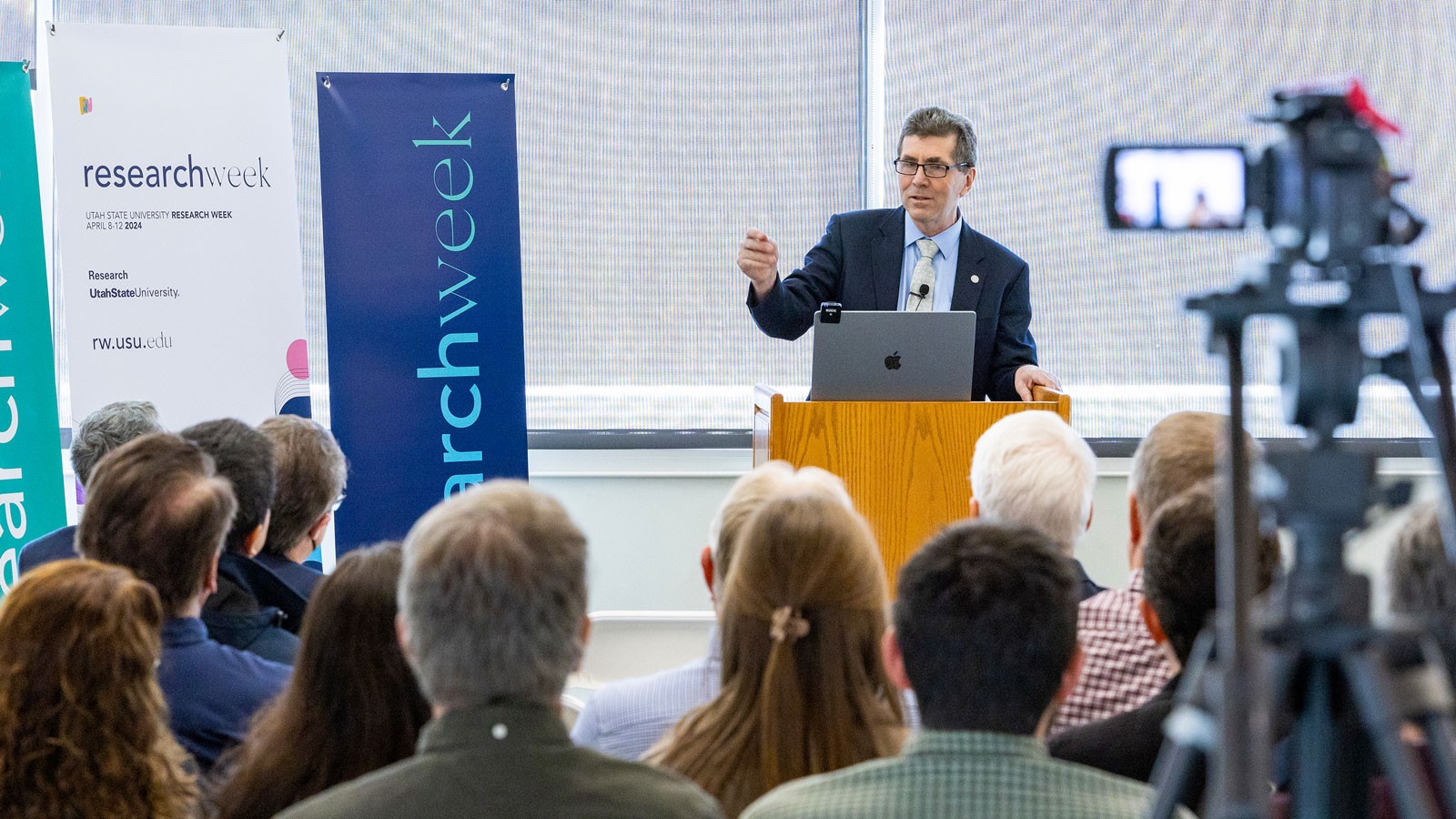
2023 D. Wynne Thorne Career Research Awardee David Tarboton Emphasizes Importance of Data
David Tarboton spoke on the importance of properly organizing and sharing research data at the annual D. Wynne Thorne Lecture on April 8.
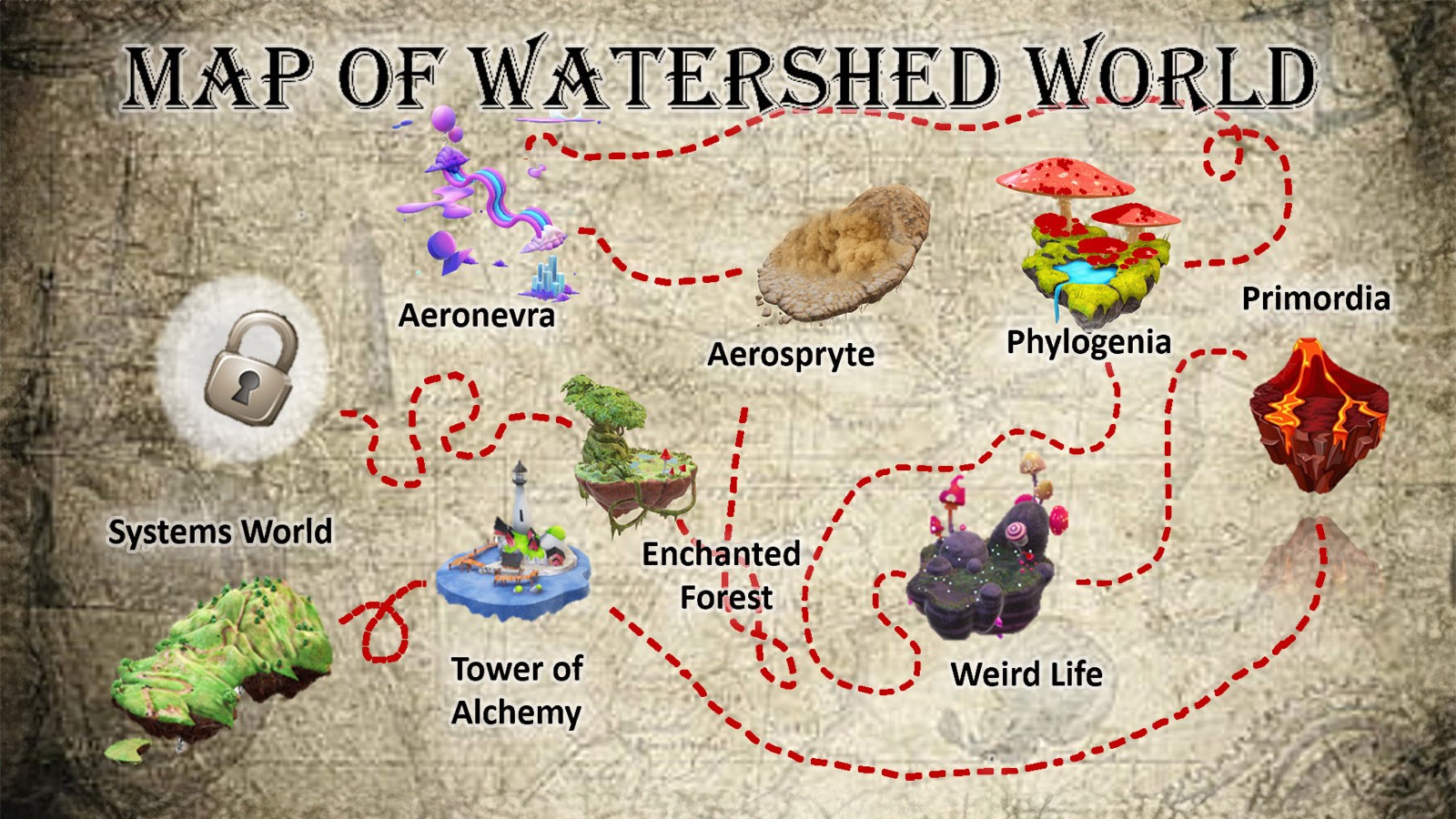
Academic Avatar: USU Professor Levels Up USU Course With Homework Gamification
Whether you’re solving sudoku, crushing candy or flinging furious fowl, interactive games have become a default part of many people’s lives. Where some see a chance to zone out, Department of Watershed Sciences faculty Janice Brahney sees an opportunity t...
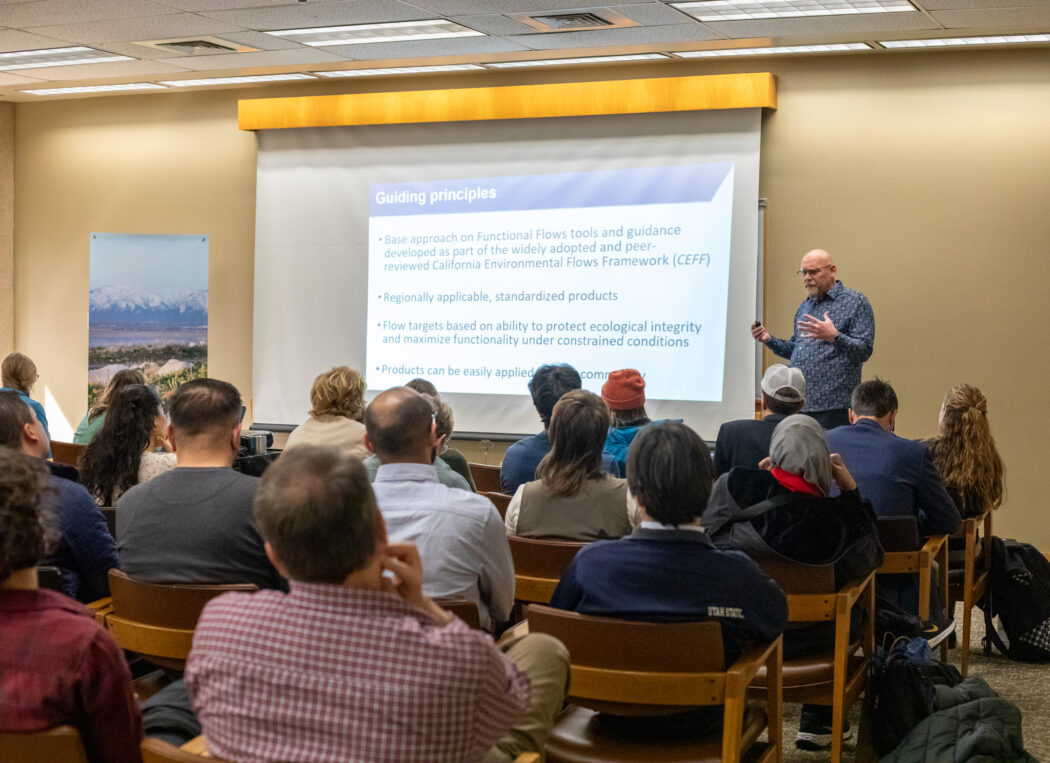
Spring Runoff Conference discusses future of Utah's water supply
The annual Spring Runoff Conference at Utah State University brings dozens of professionals together to discuss these water issues and better water management to protect Utah’s major water bodies. The conference took place March 26-27, at Cache County

Combined Water Conference that Brings Together University Researchers and Ag Producers Deemed a Success
The Janet Quinney Lawson Institute for Land, Water & Air (ILWA) held their annual run-off conference that looks at water in Utah from Bear Lake to the Colorado River and where it intersects with Utah’s water supplies and also explores the situation with o...

USU Research Week is April 8-12 at Merrill-Cazier Library
Because discovery is a core part of the land grant mission of Utah State University, the school’s Office of Research and the University Libraries will join to host events during Research Week, April 8-12.

Utah says it's making progress in the war on phragmites
Fires were set in an effort to get rid of phragmites, a highly invasive grass that is choking wetlands along the Great Salt Lake.

Climate Study Reveals Alarming Trends in Heat Wave Dynamics
Forces that drive climate change do more than just create warming temperatures; they cause more frequent extreme weather events, including heat waves. The global impact of heat waves is one reason that stories about the research have appeared in more than...

Climate Adaptation Science minor helps Cache Valley adjust to change
Utah State University offers the Climate Adaptation Science program, a nine-credit interdisciplinary specialization that aims to integrate science, research and policy to approach the changing climate.

Out of the Park: New Research Tallies Total Carbon Impact of Tourism at Yellowstone
New research from the Quinney College of Natural Resources and the Institute of Outdoor Recreation and Tourism are studying Yellowstone National Park to calculate surplus carbon visitors from across the world add to the atmosphere each year as a direct re...

Aggie Women Lead: Dean Linda Nagel of the Quinney College of Natural Resources
As part of a series, Utah State Today is publishing profiles of a variety of leaders. This interview with Quinney College of Natural Resources Dean Linda Nagel is in observation of March as Women's History Month

Gov. Cox, Pres. Cantwell to Headline Collaborative Water Conference Next Week
Cache Water Users and Utah State University have combined two annual water conferences into one event, the Northern Utah Water Users/Spring Runoff Conference, on March 26 and 27.

Aggie Women Lead: Michelle Baker, Dean of USU's College of Science
As part of a series, Utah State Today is publishing profiles of a variety of leaders. This interview with Michelle Baker, dean of the USU College of Science, is in observation of March as Women's History Month.

Seeing Double: USU Biologist Carl Rothfels is Developing Novel Polyploid Phylogenetics Tools
USU plant biologist Carl Rothfels, director of USU's Intermountain Herbarium and associate professor in the Department of Biology and the USU Ecology Center, is the recipient of an NSF CAREER Award.

Campus Climate: New Publication Proposes Framework for Higher-Ed Greenhouse Gas Accountability
Why, exactly, aren't universities better at moving the needle on climate change, even on their own campuses?

ILWA Welcomes Stephanie Frohman as New Associate Director
Stephanie Frohman will join the Janet Quinney Lawson Institute for Land, Water, and Air as associate director.

Blazing Trails: New Outdoor Recreation Plan Built With USU Support
Utah’s first ever Outdoor Recreation Strategic Plan was released Friday at the Utah State Capitol, offering state leaders, land managers and outdoor enthusiasts an insider’s look at how recreation access and infrastructure will evolve over the next 20 yea...

Speed Baiting: New Report Offers Strategy for Increasingly Crowded Utah Fishing
There may, as they say, be plenty of fish in the sea - but angling opportunities on Utah's streams, rivers and lakes are getting more crowded.

Utah High School Clean Air Marketing Contest Winners to Be Announced at Community Art Day
Winners of the 2024 Utah High School Clean Air Marketing Contest will be announced at Utah State University's Nora Eccles Harrison Museum of Art Community Art Day on Saturday, Feb. 10. Clean air public service announcements created by this year's 57 final...

New Research Finds That Dust in Atmosphere is Feeding Algae in Mountain Lakes
Dust from the atmosphere acts like a fertilizer for algae, broadening its growth tolerance. Microscopic algae are the foundation of freshwater systems, but recent shifts from climate-change stressors are changing the way they grow, according to recent res...

New Research Documents Bottom Trawling as Major Source of Carbon Added to Atmosphere
As countries work to cut emissions from fossil fuels, deforestation and other sources, a major study led by Trisha Atwood from the Quinney College of Natural Resources has found that bottom trawling - dragging heavy fishing nets across the ocean floor - c...

Going for Broke: New Symposium to Explore the Future of Economics and Sustainability
A new event on the USU campus, Dialogues on Economic Growth and Sustainability, is set to explore issues and tensions related to economic growth and sustainability.

Northern California study aims to protect livestock from mountain lions
Dr. Julie Young, an associate professor at Utah State University, is leading a study looking into non-lethal ways to keep livestock safe.

Strike Team: No Single Solution Will Cure Great Salt Lake
Experts synthesize data and insights needed to help decision-makers return lake to healthy levels.

Unequal Impacts: USU Ecologist Explores Variability in Plant, Herbivore Interactions
USU ecologist Moria Robinson, assistant professor in the Department of Biology and Ecology Center, is lead author of a Nov. 10 paper in Science exploring how and why patterns in plant-herbivore interactions vary across the globe.

Fire Histories May Be Written on Grains of Sand
Tiny bits of quartz record the intensity of fires from hundreds or even thousands of years ago, potentially offering new ways to study historic fires and how heat affects soil.

Latest National Climate Report Taps Expertise of Two QCNR Faculty
The message from the latest National Climate Assessment released this week is that the cascading effects of change are impacting every region with varying degrees of damage. The high-impact report includes two expert authors from the Quinney College of Na...

USU Professor Investigates How People Percieve and React to Extreme Heat
Peter Howe tracks a looming threat unfolding across the United States, one that causes more human casualties than floods, hurricanes, and tornadoes combined - and one that you've perhaps never even thought much about.

Reclaiming Sacred Space: QCNR Students Assist in Restoration at Wuda Ogwa Site
Students and faculty from the Quinney College of Natural Resources participate in tree-planting project at Wuda Ogwa, a site sacred to the Northwestern Band of Shoshone Nation near Preston, Idaho.

Raining Cats and Dogs: Research Finds Global Precipitation Patterns a Driver for Animal Diversity
Since the HMS Beagle arrived in the Galapagos with Charles Darwin to meet a fateful family of finches, ecologists have struggled to understand a particularly perplexing question: Why is there a ridiculous abundance of species in some places on earth and s...

Ecological Evolution: Transition Pending for Leadership at USU Ecology Center
Dr. Peter Adler will be succeeding Dr. Nancy Huntly as director of the Ecology Center at Utah State University.

2023 Report to the Governor, Legislature on Utah's Land, Water, & Air Released
The Janet Quinney Lawson Institute for Land, Water, and Air released the 2023 Report to the Governor and Legislature on Utah's Land, Water, and Air at an event in downtown Salt Lake City on Thursday morning.

Recipe for Safety: USU Scientists Receive NOAA Grant to Study Extreme Snow Loads
Utah's 2022-2023 meteorological winter was one of the wettest ever recorded in the Beehive State. While the generous precipitation was a welcome boost to dry reservoirs and groundwater supplies, the massive snowfall brought its share of headaches for prop...

Survey counts shorebirds at Great Salt Lake as they begin migrating south
This past August, the National Audubon Society, Utah Division of Wildlife Resources, Sageland Collaborative, Point Blue Conservation, Tracy Aviary, and the US Fish and Wildlife Service all came together to conduct their biannual migratory shorebird survey...

USU speaker explores ecological decision - making and the power of collaboration
Zhao Ma is a professor of Natural Resource Social Science at Purdue University. Her work is centered at the crossroads of ecological and social change. At her seminars this week, she explored invasive plant management, adaptation to climate change, and ho...

Scientists at Canyonlands Research Center finding climate change solutions
The Canyonlands Research Center is a research ranch in arid, Moab, Utah. This ranch provides insight into how climate adaptation can occur with agriculture and ranching, but also with restoration practices.

Capturing Carbon in Savannas: New Research Examines Role of Grasses for Controlling Climate Change
New research shows that in addition to trees, humble grasses play an essential role in capturing carbon to fight climate change in savanna ecosystems.

Rising temperatures contribute to worsening air quality
"We have these beautiful popcorn cumulus that just sit there and you look at the shape of the clouds, that type of day, we go outside and go to the beach, it just cooking pollution that's already been sitting there. And so that's what makes air quality wo...

Poll: Utahn's perception of climate change shifts
Results from the Utah People and Environment Poll are showing a positive shift in Utahn's perceptions of climate change - reflecting a growing understanding among residents of its impacts and causes.

Thirsty Roots: Identifying Plant Winners, Losers Under Changing Climate
In some places rain is changing - it is falling less often, but with more intensity. New research is deciphering which plants might thrive and survive under these new conditions, and it often depends on their roots.

Carbon farming has garnered increasing attention as a way to reduce carbon dioxide in the atmosphere
Jennifer Reeve, associate professor of organic and sustainable agriculture, and Matt Yost, associate professor and agroclimate Extension specialist, have joined an international team that aims to gather data on how different farming techniques remove carb...

USU Professor Inspires Creation of Billionaire Businessman's Nonprofit, Travels to Antarctica for Leadership Summit
Physics professor Robert Davies and former student Jacob Alder share climate concerns on 'surreal' trip with Walking Softer.

USU Ecologists Receive CDC-Supported Grant to Study Insecticide Resistance in Mosquitoes
Doctoral scholar Emily Calhoun and faculty mentor Norah Saarman partner with public officials on abatement, disease prevention efforts.

Salt on Frost: Researchers Recording Impact of Once-in-a-Lifetime Storm on Alaska Coast
Chevak, Alaska was hit by a 70-year typhoon in September 2022, and a USU team is evaluating long-term vegetative changes in the wake of the storm.

New Website Helps Public Understand Importance of Great Salt Lake Wetlands
Utah State University journalists at Utah Public Radio have created an interactive website to help Utahns understand the critical role Great Salt Lake and its wetlands play in the ecosystem that is crucial to 10 million birds.

USU Blanding and Moab to Host 'Sentinels' Art Exhibit
Utah State University Blanding and Utah State University Moab will host the art exhibit Sentinels, presented by the Last Glacial Collective. The exhibit is a collaboration of artists that worked to present their concern for the global future through artis...

Human Activities May Have Boosted the West's 'Precipitation Roller Coaster'
The Western U.S. is a hotspot for studying climate change impacts on the hydrological or water cycle. Despite lower-than-average total precipitation in 2021, the contrasting dryness and wetness in the Western U.S. has been widely described as a "precipita...

Utah With No Great Salt Lake? Report Warns of Lake's Ultimate Demise Without Action
The Great Salt Lake's disappearance could cause immense damage to Utah's public health, environment, and economy. The choices we make over the next few months will affect our state and ecosystems throughout the West for decades to come.

Salt Lake City's efforts to fight pollution face a new challenge: Toxic dust
Declining water levels exposed much of the Great Salt Lake's bed and created conditions for storms of dust laden with toxic metals that now threaten 2 million people.

Catching Up to Climate Change: Researchers Track Big-Picture Patterns in Plant Transformations
If plants were a bit more ambulatory, Peter Adler and Michael Stemkovski might find their work to be a bit less urgent.

Measure to Manage: Water Solutions Begin With Better Data
It might come as a surprise that the water stores we assume are so carefully measured and divided are not always precisely accounted for or understood.

Scientists in Moab are working to understand how climate change will impact desert biocrusts
CAS faculty Sasha Reed is working with a team to study how the loss of biological soil crusts could affect water cycles and desert ecology.

At 10th Anniversary of 'Rising Tide: The Crossroads Project,' Performers Reflect
First debuted back in 2012, 'Rising Tide: The Crossroads Project' recently marked its 10th anniversary with a special performance at Utah State University - where the project initially began to take shape.

Science Moab: Building beefy sustainability plans
As the climate becomes warmer and drier in the Colorado Plateau, traditional Angus-cattle ranching is facing challenges. USU students Will Munger and Maria Stahl are exploring the possibilities of Criollo cattle at the Dugout Ranch in San Juan County.

USU Soil & Plant Scientists Part of $15M Project to Study Carbon Farming
With record high temperatures scorching Utah into September this year and crushing previous years' records, the effects of excess carbon in Earth's atmosphere is impossible to ignore. To combat these effects, a $15 million research project has been funded...

Matt Yost to Talk Saving Water on Farms at the Next Research Landscapes
USU Extension Specialist and researcher Matt Yost will be speaking at the USU Research Landscapes on the topic of water optimization.

Climate change makes weather worse : NPR
Scientific studies are finding that climate change is intensifying weather with heat waves occurring more often, cold temperatures getting colder, and rainfall amounts becoming more extreme.

Interdisciplinary Team of Researchers Explores How Canal Corridors Can Support Active Transportation
An interdisciplinary team of Utah State University researchers recently explored how historic canal trails can be used as an active transportation solution. Their findings will help the Utah Department of Transportation and community leaders make decision...

Criollo cattle could save ranching
In this period of great drought, scientists are researching whether Criollo cattle are better adapted to climate change and if they have a lesser impact on desert landscapes being affected by climate change.

Real Beef. Done Well. An Eco-Friendlier Meal Using 'Smart Foodscapes'
Many foods you see are advertised as 'carbon neutral' achieve that on paper by putting money into carbon shares after traditional production. We're trying to create a little more authenticity in that process.

UnDisciplined: what will happen to Utah's 'greatest snow' when there's no more snow?
Utah is commonly known for its "greatest snow on earth" claim to fame. Home to 15 well-revered ski resorts, both residents and tourists alike spend the winter months on the slopes. However, this title of "greatest snow" is at risk due to climate change.

Vanishing Act: Desiccated Lake in Chile Has Parallels to Struggling Great Salt Lake
The Great Salt Lake is following a similar pattern to central Chile's former Lake Aculeo. Will Munger, a PhD student at USU, compares the two lakes and provides possible solutions to prevent the Great Salt Lake from the fate of Lake Aculeo.

Exhibit at Swanter EcoCenter Lets Public Dive Into Watershed Modeling
The Decisions Downstream exhibit at the Swaner EcoCenter in Park city uses art and science to illustrate how management decisions about rivers could be improved by incorporating information about the ecosystem.

Study: Adding Tree Cover on Savannas Has Only Limited Benefits Toward Fixing Climate Change
Although savannas already hold substantial belowground carbon, new research, conducted by USU's Yong Zhou, found that increasing tree cover through fire suppression captures much less carbon than projected.

Snowbound: Big Trees Boost Water in Forests by Protecting Snowpack
Trees have a complex relationship with snow and energy as the season warms up, but new research from USU's Department of Wildland Resources shows that big trees can protect melting snowpacks in water-stressed environments.

Change of Scenery: New Research Outlines How Recreation Will Shift with Climate Change in the West
In the Western U.S. where skiing, hiking, biking, hunting and other forms of outdoor recreation are core to many people’s lives, and where local economies rely on income generated by these activities, the impacts of a changing climate are already difficul...

USU Researcher Exploring Ways Improve Water Conservation Messaging
According to USU professor David Rosenberg, water conservation information needs to be communicated in a way that explains why conservation is needed and frames conservation messages as potential opportunities with benefits

USU Geosciences Department Named American Geophysical Union Bridge Program Partner
Dennis Newell, graduate director in the Department of Geosciences, is coordinating the department's efforts as a new AGU Bridge Program partner. The nationwide initiative encourages underrepresented students to pursue graduate studies in geosciences.

Head Above Water: Major Grant Awarded for Research on Water Markets
A new grant will allow researchers to determine how water markets can be used to make water management systems more resilient. The interdisciplinary team include (left to right) Matt Yost, Niel Allen, Sarah Null, David Rosenberg, and Alfonso Torres-Rua.

Precipitation in the North but Deepening Drought Likely
According to the Utah Climate Center, although Utah is likely to see a split in the precipitation pattern, confidence is even greater that the state will experience above-average wintertime temperatures everywhere, which can lead to more frequent rain ins...

USU Part of New Institute to Understand Climate Change, Other Disasters
A multi-disciplinary team of researchers at USU creating tools to better understand the global impact of climate change and other disasters as part of a national initiative.

USUs Rob Davies explains how Utah is affected by climate change
Davies is calling on lawmakers to develop policies that tackle climate change to stop the trends that could lead to more dangerous extremes — including more drought, heatwaves and flooding.

Climate Change in Utah will Require Ski Resort Adaptations
Climate change is predicted to increase temperatures and shift precipitation patterns in Utah, which could have significant impacts on ski resorts.

USU Researcher Leads Team Monitoring Grizzly Creek Burn Scar Hydrologic Response
Heavy rains in early late June and early July have triggered flash floods and multiple debris flows in the Grizzly Creek Fire burn scar area; USUs Belize Lane and Haley Canham are part of the team picking up where the firefighters left off.

Hard Choices are Ahead for the Colorado River, but One Scientist's Voice is Making Waves
USUs Jack Schmidt highlights the risks of business as usual on the Colorado River, knowing he may have to accept a difficult truth: that people may again decide to sacrifice the river's ecosystems to get the water they want for cities, farms, and power.

Lainie Brice Publishes a BLM Literature Database on the CAS Website
Laine Brice publishes her capstone communication project on the CAS Website!

USUs Rosenburg, Wurtsbaugh, Null, and Kettenring Collaborate with Iranian Researchers on Lake Urmia Restoration
In a rare exchange, scientists and water resources engineers from Iran and Utah are collaborating on a bold scientific study to restore Lake Urmia, one of the world’s largest saline lakes.

Study in Nature: Protecting the Ocean Delivers a Comprehensive Solution for Climate, Fishing and Biodiversity
USUs Trisha Atwood and 25 other experts offer the most comprehensive assessment to date of where to ramp up strict ocean protection to increase seafood security, curb biodiversity loss, and provide a cost effective solution to climate change.
Chuck Hawkins Awarded Society for Freshwater Science Award of Excellence
Chuck Hawkins has been awarded the SFSs AoE for his contributions to research on freshwater ecosystems, aquatic bioassessment, and leadership across freshwater science.

'Best Case' Goals for Climate Warming Could Still Result in Massive Wildfire Risk
Recently, researchers including USU's Simon Wang, found that even just a half-degree of warming could significantly increase the likelihood and significance of wildfires.

New research demonstrates crucial role of World Heritage marine sites in fighting climate change
UNESCO released the first global scientific assessment of its World Heritage marine sites’ blue carbon ecosystems, highlighting the critical environmental value of these habitats. Dr. Trisha Atwood is one of the contributors to this report.

A Healing Ground
With the help of a team of students from Utah State University, members of the Northwest Band of the Shoshone Nation are working to restore the sacred land at the site of the Bear River Massacre.

Finished your PhD? Six questions to ask yourself about what’s next: Dr. Trisha Atwood Interviewed
There are many different paths that can lead to a successful career; Nature Index asked five researchers, including Dr. Trish Atwood, for their insights on what to do after completing a PhD.

New Model Improves Management of Wetland, Floodplain and River Habitats
USU Associate Professor David Rosenberg and Ayman Alafifi, a water resources engineer at Brown and Caldwell, have developed an innovative computer model that helps water and wetland managers make better, data-based decisions.

Matt Yost Recognized for Early Career Research/Outreach on Utah’s Water Use
Matt Yost, an assistant professor and Extension agroclimate specialist at Utah State University, has been recognized by the American Society of Agronomy with the organization’s Early Career Award.

Land-use and Personal Wellbeing is Topic for USU’s Research Landscapes
Dr. Courtney Flint, a natural resources sociologist, will address how understanding the relationship between Utah's lands and personal well being is necessary for Utah's future at the next Research Landscapes.

Against the Current: Trisha Atwood Receives Early-Career Research Fellowship
Trisha Atwood of Watershed Sciences and the Ecology Center is a recipient of a National Academies of Sciences, Engineering and Medicine Gulf Research Program Early-Career Research Fellowship.

USU Ecologist Receives DOE Grant to Study Soil’s Role in Carbon Cycle
Utah State University ecologist Bonnie Waring heads one of seven projects chosen nationally by competitive peer review for a U.S. Department of Energy Terrestrial Ecological Sciences grant.

Coldwater Fishing in a Warming Climate
Researchers from Utah State University’s Institute of Outdoor Recreation and Tourism recently completed research to better understand how shifting spring runoff is affecting angling in the Yellowstone River watershed.

Greenhouse Gas Reduction Committee Looks to Reduce USU Carbon Footprint
CAS Co-PI Patrick Belmont and other USU faculty bring attention to USU's carbon footprint.

USU Grad Students Gain Cross-Disciplinary Skills to Tackle Climate Change
How do you tackle a wicked problem like climate change? Though there aren't any easy answers, there are complex ones, and it’s these nuanced approaches that graduate students are pursuing in the CAS program.

A Finger on the Pulse of U.S. State Parks
Jordan Smith and colleagues in the Institute of Outdoor Recreation and Tourism characterize the operation of the nation’s 50 state park systems between 1984 and 2017.

CAS Faculty Work Toward a Resolution on USU Greenhouse Gas Emissions
Patrick Belmont and Chris Monz are leading an effort toward a resolution that would bolster a commitment by former President Albrecht to make USU a carbon neutral university

Where do Americans agree on climate change policies?
CAS faculty member Peter Howe and colleagues in the Yale Program on Climate Change Communication are featured in the New York Times for work highlighting public consensus on solutions.

CAS Trainee Hongchao Zhang Examines Relationship Between Air Quality and Wintertime Canyon Visitation
Zhang and faculty member Jordan Smith determined the influence of a variety of "push" and "pull" factors.

Trainee Christina Morrisett Profiled by Bill Lane Center for the American West
Morrisett (CAS Cohort 3 PhD Student) completed a summer internship with the Center during her undergraduate career at Stanford.

Wildfires Pose Underestimated Risk to Water Security According to USU Researchers
Drs. Brendan Murphy, Larissa Yocom, and Patrick Belmont acknowledge the well-documented risk wildfires pose to homes and structures, but highlight the less appreciated risk that high severity wildfires pose for water security.